
Table of Contents
- Why Can't a Standard Pump Handle Juice and Food Processing Liquids?
- What Is a Dynamic Sealing Pump, and How Does the Sealing Mechanism Work?
- Why Does Hygienic Pump Design Matter for Juice and Beverage Plants?
- Dynamic Seal Pump vs Sanitary Centrifugal Pump: Which One Should You Specify for Juice Duty?
- Where Do Dynamic Pumps Fit on a Juice and Beverage Processing Line?
- How Sintech Engineered Food Processing Pumps for India's Juice Industry
- How Do You Keep a Juice Pump Running Through Peak Crushing Season?
- Conclusion
- Frequently Asked Questions
A dynamic sealing pump moves juice,pulp, and beverage liquids without a conventional mechanical seal, relying instead on a rotating hydrodynamic sealing chamber. For plants that cannot risk product contamination, it functions as a true hygienic pump, giving processors a leak-free pump option where standard seals would fail. This guide explains how the technology works, where it fits on a juice line, and what to check before you specify one.
Why Can't a Standard Pump Handle Juice and Food Processing Liquids?
Juice is not water. It carries pulp, fibre, natural acids, and sugars that behave very differently once they pass through an impeller. A pump built for clean water will struggle here, and a pump built for chemical process duty will often introduce contamination risk that no food safety officer can accept. This is why food processing pumps are treated as a distinct engineering category, not a smaller version of an industrial pump.
Plant engineers running juice extraction, pulp transfer, or concentrate lines face a specific problem: standard mechanical seals wear out quickly when exposed to acidic, fibrous liquids, and any seal leak becomes a direct product safety issue. A single seal failure on a juice pump can halt an entire shift, waste a batch, and trigger a hygiene audit. For plants operating in Ghaziabad, Uttar Pradesh, and across India's food processing belt, this downtime carries a real cost during peak fruit season, when every hour of production matters.
What Is a Dynamic Sealing Pump, and How Does the Sealing Mechanism Work?
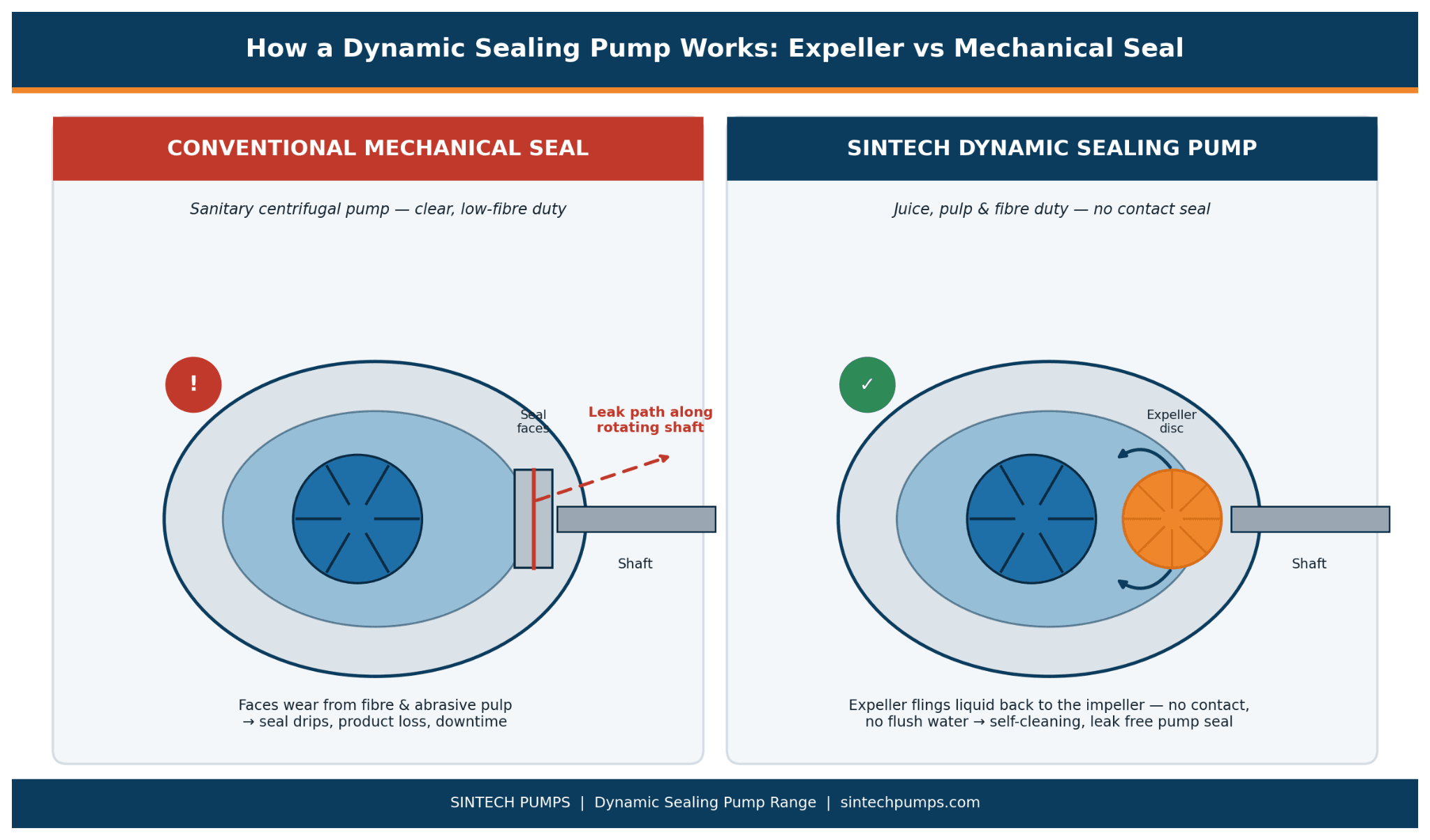
A dynamic sealing pump replaces the traditional mechanical seal with a rotating disc or expeller mounted behind the impeller. As the shaft turns, this disc creates a low-pressure zone that pushes liquid away from the shaft opening instead of letting it creep along the shaft toward the bearings. There is no static seal face rubbing against a rotating one, which is exactly where conventional seals fail under pulp and fibre.
Because there is no contact seal to wear down, this pump design avoids the single biggest cause of downtime in juice transfer: seal degradation. Where mechanical seals that beverage lines have relied on for decades tend to score, crack, or clog with fibre over months of continuous use, the sealing chamber inside this leak-free pump stays largely self-cleaning, since centrifugal force keeps solids moving away from the shaft rather than settling against it.
This is also why the design earns a reputation for hygienic performance. With no seal faces sitting in the product stream and no external flush water needed to cool a seal, there is one less potential contamination point between the fruit and the finished juice. Sintech's dynamic sealing pump range was engineered specifically around this principle, drawing on decades of experience supplying pumps to India's sugar and process industries, where fibrous, viscous liquids are the daily norm rather than the exception.
Expeller vs Mechanical Seal: The Core Engineering Difference
The expeller design is the single feature that separates dynamic pumps from ordinary sanitary equipment. Instead of asking a seal to hold back pressure, the pump geometry itself does the job, using rotation rather than friction. Engineers sometimes describe this as a "seal-less" pump, though the more accurate term is dynamic sealing, since the sealing action happens continuously while the shaft is turning rather than through a static barrier.
Also Read – Dynamic seal pumps: when mechanical seals fail for industrial use
Why Does Hygienic Pump Design Matter for Juice and Beverage Plants?
Food safety regulations in India, aligned with FSSAI norms and increasingly with export-market expectations, require processing equipment that can be cleaned in place and that does not introduce product-contact risks. A hygienic pump is not simply a pump made of stainless steel. It is a pump whose entire wetted path, from suction to discharge, avoids crevices, dead zones, and leak paths where bacteria or residue can build up.
This matters because juice and beverage processors run extended production campaigns during harvest season, sometimes 18 to 20 hours a day, with only short cleaning windows between shifts. A hygienic pump that can be flushed quickly and reliably keeps that schedule intact. A pump that traps residue in a packed gland or a leaking seal chamber, on the other hand, extends cleaning time and increases the risk of a failed hygiene inspection.
Buyers evaluating a hygienic pump for a new line should look closely at wetted-part material certification, surface finish, and whether the pump construction meets recognised process standards such as ISO 2858,[a][b][c] which Sintech pumps are manufactured to across its process range. The mechanical seals beverage plants, once treated as unavoidable maintenance, are increasingly the first thing quality teams question during a hygiene audit. A hygienic pump built to these standards gives quality teams a documented basis for food safety audits, rather than a manufacturer's verbal assurance.
Dynamic Seal Pump vs Sanitary Centrifugal Pump: Which One Should You Specify for Juice Duty?
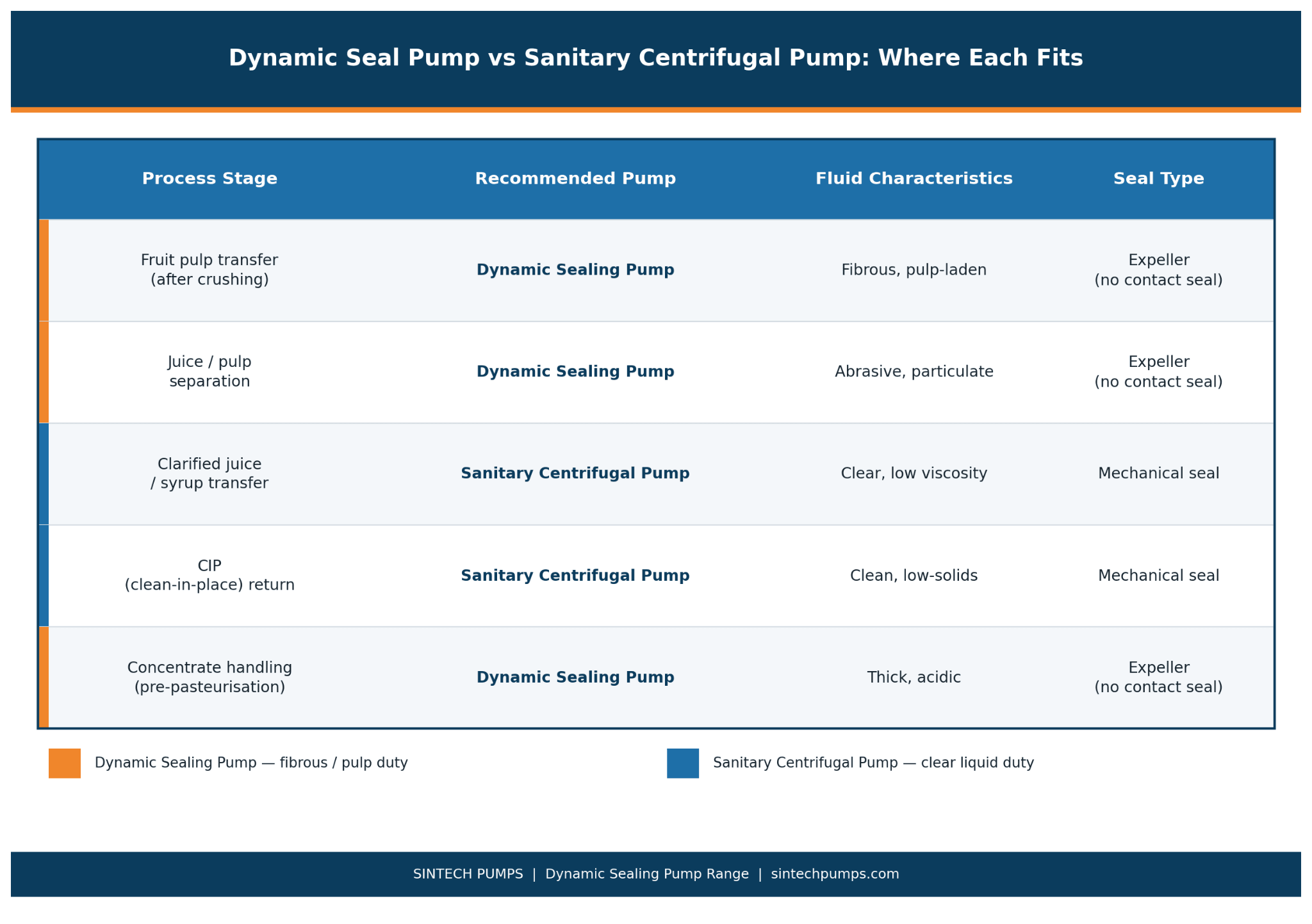
Not every application on a juice line needs a dynamic seal pump. A standard sanitary centrifugal pump, fitted with a well-specified mechanical seal, still performs well on clear liquids such as clarified juice, syrup, or CIP (clean-in-place) return lines, where fibre and solids content is low.
The distinction becomes important once pulp, seeds, or fibre enter the liquid stream. A conventional centrifugal pump relying on a standard seal will see accelerated wear in these conditions, because abrasive particles work their way between the seal faces. This is where mechanical seals beverage plants, once accepted as routine maintenance, become an avoidable cost. This design sidesteps that wear mechanism entirely, which is why Sintech recommends it specifically for pulp transfer, extraction, and any stage where the liquid still carries fibre.
For plants running both clear and pulpy streams, the practical answer is often both pump types working together: a conventional centrifugal pump on the clean side of the process, and a juice pump built on dynamic sealing technology wherever fibre or pulp is present. Specifying the wrong one in either position usually shows up within the first production season, either as premature seal replacement or as unnecessary capital cost on a duty that never needed the added complexity.
Where Do Dynamic Pumps Fit on a Juice and Beverage Processing Line?
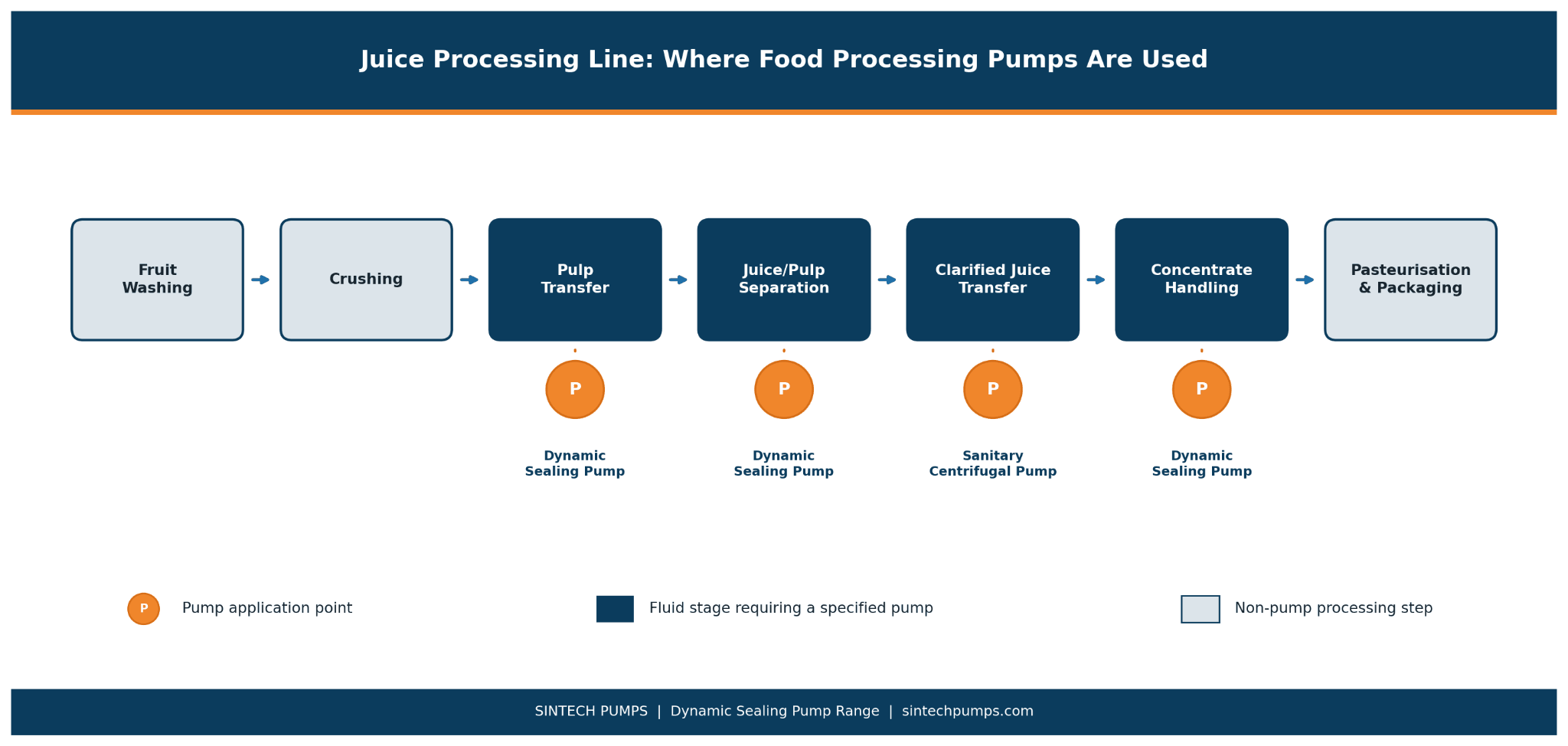
Dynamic pumps typically appear at three points in a juice processing line: fruit pulp transfer after crushing, pulp and juice separation stages, and concentrate handling before pasteurisation. At each of these points, the liquid is thick, sometimes acidic, and often abrasive, which is exactly the operating profile this pump design was created for.
A well-specified juice pump at the pulp transfer stage also reduces product loss. Because there is no seal leakage path, less juice is lost to drips, flush water, or seal cooling systems, which matters when raw material costs are rising and yield efficiency is under scrutiny from plant management. Food processing pumps that reduce product loss pay for themselves faster than their upfront cost alone suggests, particularly across a full harvest season.
Beverage bottling and dairy-adjacent processing lines apply the same logic. Any stage carrying viscous or particulate-laden liquid benefits from a hygienic pump built on dynamic sealing principles, while clear, low-viscosity transfer stages can continue to use conventional centrifugal pump designs without over-specifying the equipment.
Also Read – Pumps for Paper and Pulp Industry Complete Guide to Types and Applications
How Sintech Engineers Food Processing Pumps for India's Juice Industry
Sintech Precision Products Limited has manufactured pumps in Ghaziabad since 1986, and its dynamic sealing pump line draws directly on the company's long-standing experience serving India's sugar industry, where fibrous, pulp-laden liquids are a daily engineering challenge. That same expertise carries over naturally to juice and beverage processing lines, since the fluid-handling problem is fundamentally similar.
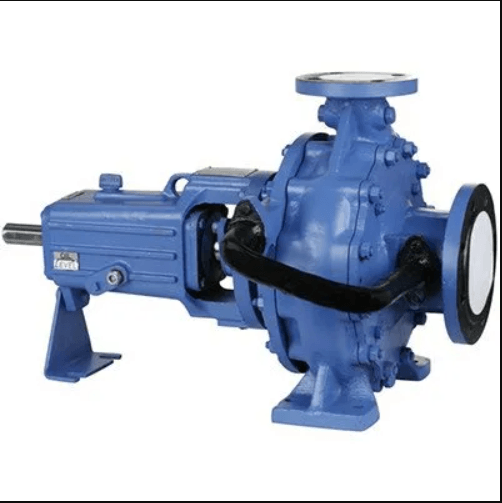
Every Sintech pump in this range is built to ISO 9001 quality processes, with wetted parts and surface finishes selected for food-contact duty. Rather than positioning one universal pump for every application, Sintech's engineering team reviews the specific fluid characteristics, fibre content, and capacity requirements of a plant before recommending a dynamic seal pump, a sanitary centrifugal pump, or a combination of both across a line. This is not a sales pitch dressed up as advice; it reflects how pump failures actually happen in the field, almost always from a mismatch between fluid conditions and seal type rather than from poor manufacturing quality.
How Do You Keep a Juice Pump Running Through Peak Crushing Season?
Even a well-designed hygienic pump needs a maintenance routine that matches its operating season. Juice and food processing plants tend to run pumps hard for a concentrated period each year, then leave equipment idle for months, which creates its own wear pattern distinct from continuous industrial duty.
Before each season starts, plant engineers should check bearing condition, confirm the expeller clearance on the sealing mechanism, and verify that flush or barrier fluid systems, where fitted, are functioning correctly. A leak-free pump only stays leak-free if the expeller geometry and bearing housing are inspected before the harvest load begins, not after the first failure appears mid-season.
During the season itself, the biggest maintenance advantage of this seal-less design shows up in reduced downtime events, since there is no seal face to replace on short notice during a production run. Plants that have moved away from conventional mechanical seals that beverage lines depended on for years, switching instead to dynamic pumps on pulp duty, typically report fewer unplanned stoppages during peak crushing or extraction weeks, which is often the single strongest argument for the upfront investment.
Conclusion
Choosing between a dynamic seal pump and a standard sanitary centrifugal pump is not about picking the more advanced option. It is about matching pump design to what is actually moving through your line, batch after batch, season after season. Fibrous, pulpy, acidic liquids call for a hygienic pump built on dynamic sealing principles. Clear, low-viscosity streams often do not need that added complexity.
If your plant is specifying new pumps for an upcoming juice or food processing season, or reviewing why an existing centrifugal pump keeps failing at the seal, Sintech's engineering team can review your process conditions and recommend the right configuration before fabrication begins. You can explore the dynamic sealing pump range and technical specifications on the Sintech Pumps website, or reach out to discuss your specific application before your next production run.
Frequently Asked Questions
What is a dynamic sealing pump used for?
A dynamic sealing pump is used to transfer viscous, fibrous, or pulp-laden liquids, such as fruit juice, pulp, or sugar mill process liquids,without relying on a conventional mechanical seal.
How is a dynamic seal pump different from a regular centrifugal pump?
This pump design uses a rotating expeller to keep liquid away from the shaft, while a regular centrifugal pump relies on a static mechanical seal that is prone to wear from fibre and abrasive particles.
Is a dynamic sealing pump considered a hygienic pump?
Yes. Because it has no exposed seal faces sitting in the product stream and needs no external flush water, a dynamic sealing pump is widely classified as a hygienic pump suitable for food and beverage duty.
Can this pump design handle juice with pulp and fibre?
Yes, this is the exact condition the design was created for. Standard mechanical seals beverage plants used in the past would wear out quickly under the same load.
Does a juice pump need special material certification?
Most food processing pumps require wetted parts in food-grade stainless steel with surface finishes that meet hygiene standards, along with documentation for FSSAI or export compliance audits.
How often should a leak-free pump be inspected?
Even a leak-free pump benefits from a pre-season inspection of bearings and expeller clearance, since seasonal, high-load operation wears components differently than continuous industrial duty.
Are dynamic pumps more expensive than standard sanitary centrifugal pumps?
The upfront cost is typically higher, but food processing pumps built on dynamic sealing technology usually recover that cost through reduced seal replacement and less unplanned downtime during peak season.
Does Sintech manufacture dynamic sealing pumps in India?
Yes. Sintech Precision Products Limited, headquartered in Ghaziabad, Uttar Pradesh, manufactures a dynamic sealing pump range built on ISO 9001 quality processes for sugar, juice, and food processing applications.
Hey, like this? Why not share it with a buddy?
« Axial Flow Impeller vs Radial Impeller vs Mixed Flow Impeller: Design & PerformanceWhat Is a Sump Facility? Sump Design, Types & Industrial Uses Explained »