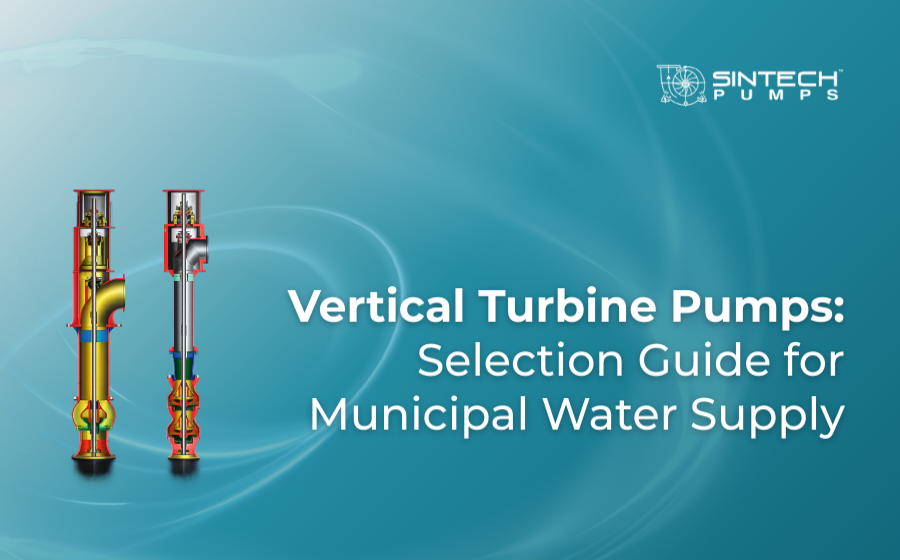
Municipal water systems are the backbone of urban life. From supplying drinking water to supporting sanitation and public infrastructure, these systems must operate with precision, reliability, and efficiency. At the heart of many such systems lies a critical piece of equipment: the
vertical turbine pumps.Selecting the right pump is not just a technical decision. It is a long-term investment that directly impacts operational stability, lifecycle costs, and service delivery to communities. This guide is designed to help municipal engineers, planners, and decision-makers understand how to choose the right turbine vertical pump for their specific needs.
Understanding Vertical Turbine Pumps in Municipal Applications
A
vertical turbine pump is a vertically mounted centrifugal pump designed to lift water from deep sources such as borewells, reservoirs, and intake structures. The motor sits above ground while multiple impeller stages are submerged in the water source. Each stage progressively increases pressure, allowing the pump to deliver water over long distances or to elevated storage tanks.
Key characteristics:- Vertically installed – minimal surface footprint
- Multi-stage impeller design for deep lifting
- Suitable for borewells, open wells, and surface water intakes
- Preferred for municipal water supply, irrigation, and industrial use
A vertical turbine pump is a type of centrifugal pump designed to move water from deep sources such as wells, reservoirs, and intake structures. Unlike horizontal configurations, these pumps are vertically installed, allowing the motor to remain above ground while the pump bowls are submerged in the water source.This design makes vertical turbine pumps particularly suitable for municipal water supply systems where water needs to be lifted from varying depths efficiently and consistently.In a typical setup, the turbine pump consists of multiple impellers arranged in stages. Each stage increases the pressure of the fluid, enabling the system to deliver water across long distances or to elevated storage tanks.The simplicity of operation, combined with high efficiency, makes the
turbine water pump a preferred solution for municipal infrastructure projects across urban and semi-urban regions.
Why Municipal Systems Rely on Vertical Turbine Pumps?
Municipal water supply systems operate under constant demand. They require equipment that can handle continuous operation without compromising performance.The turbine vertical pump stands out because of its ability to handle large volumes of water while maintaining energy efficiency. Its vertical configuration also minimizes footprint, which is especially important in space-constrained installations.Another key advantage is adaptability. Whether installed in borewells, open wells, or surface water intakes, the vertical pump can be configured to meet site-specific requirements.Moreover, many vertical turbine pump manufacturers design these systems with corrosion-resistant materials, ensuring durability even in challenging water conditions.
Key Factors to Consider When Selecting a Vertical Turbine Pump
1. Flow Rate and Head Requirements
The first step in selecting a turbine pump is understanding the required flow rate and total dynamic head. Municipal systems often deal with fluctuating demand patterns, so it is important to select a pump that can operate efficiently across a range of conditions.A well-designed turbine water pump should deliver consistent performance without excessive energy consumption.
2. Water Source Characteristics
The quality and nature of the water source play a critical role in pump selection. Factors such as sand content, corrosiveness, and temperature must be considered.For instance, in areas where groundwater contains abrasive particles, a robust turbine vertical pump with wear-resistant components becomes essential.
3. Installation Depth
Depth determines the configuration of the vertical turbine pumps. Deeper installations require more stages and stronger shaft designs to maintain efficiency and structural integrity.Experienced
vertical turbine pump manufacturers in India often provide customized designs based on site depth and operational requirements.
4. Material Selection
Material choice directly impacts the lifespan of the vertical pump. Stainless steel, bronze, and special alloys are commonly used depending on water chemistry.Leading vertical turbine pump manufacturers ensure that material selection aligns with both performance and durability expectations.
5. Energy Efficiency
Energy costs form a significant portion of operational expenses in municipal systems. Selecting an energy-efficient turbine pump can lead to substantial savings over time.Modern turbine water pump designs focus on optimized hydraulics to reduce power consumption while maintaining output.
Types of Vertical Turbine Pumps Used in Municipal Systems
| Type | Installation | Best For | Depth Range |
|---|
| Deep well VT pump | Borewell | Groundwater extraction | 30m+ |
| Short-set VT pump | Sump/surface intake | Rivers, lakes, reservoirs | Shallow |
| Lineshaft turbine pump | Open well/canal | Irrigation & municipal supply | Medium |
1. Deep Well Vertical Turbine Pumps for Groundwater Extraction
Municipal systems that rely on groundwater sources often use vertical turbine pumps designed specifically for deep well applications. These pumps feature long shafts and multiple impeller stages, allowing them to efficiently lift water from significant depths.In rural and semi-urban regions, where borewells are a primary water source, these pumps play a critical role in ensuring consistent water supply. The multi-stage design helps build the required pressure gradually, making them highly efficient for deep lifting while maintaining energy efficiency and operational stability.
2. Short-Set Vertical Turbine Pumps for Surface Water Applications
For surface water sources such as rivers, lakes, and reservoirs, municipalities typically use short-set or sump-installed vertical turbine pumps. Unlike deep well systems, these pumps are installed in shallower environments where water is more accessible.Their compact design allows for easier installation and maintenance, while still delivering high flow rates required for municipal distribution. These pumps are widely used in urban water treatment plants where large volumes of water need to be moved quickly and efficiently.For surface water intake applications requiring very high flow rates, horizontal and
vertical axial flow pumps are also worth evaluating alongside short-set vertical turbine configurations.
Common Challenges in Municipal Pump Selection
1. Underestimating Future Demand and System Expansion
One of the most frequent challenges municipalities face is planning only for current water demand. While a system may perform efficiently today, population growth, urban expansion, and seasonal fluctuations can quickly increase requirements.Selecting a turbine pump that only meets present needs can result in overloading, reduced efficiency, and the need for premature upgrades. A well-planned
vertical pump system should always account for scalability, ensuring it can handle future demand without compromising performance or requiring major redesign.
2. Improper Installation and Alignment Issues
Even the most advanced pumping system can fail if installation is not executed correctly. A turbine water pump requires precise alignment, a stable foundation, and accurate assembly to function efficiently.Improper installation can lead to excessive vibration, shaft misalignment, bearing wear, and energy losses. Over time, these issues not only reduce the lifespan of the pump but also increase maintenance costs and downtime. Ensuring correct installation practices is just as important as selecting the right equipment.
3. Lack of Site-Specific Design Consideration
Municipal water systems vary widely in terms of geography, water source, and infrastructure. Treating every project the same can lead to poor performance. A vertical pump that works well in one location may not be suitable for another due to differences in depth, water quality, or system layout.Careful evaluation of site conditions is essential when selecting a turbine pump, as even minor mismatches can impact efficiency and long-term reliability.
4. Limited Focus on Maintenance and Lifecycle Costs
Another common oversight is focusing only on initial procurement rather than long-term operation. While a turbine water pump may appear cost-effective upfront, neglecting maintenance requirements and lifecycle costs can lead to higher expenses over time.Factors such as ease of servicing, availability of spare parts, and durability under continuous operation should be considered when choosing a vertical pump for municipal use.
5. Not Partnering with Experienced Manufacturers
Selecting the right equipment without expert guidance can lead to costly mistakes. This is where working with experienced vertical turbine pump manufacturers in India becomes essential.Their expertise goes beyond manufacturing. They provide valuable insights into design, customization, installation, and maintenance. By partnering with reliable vertical turbine pump manufacturers in India, municipalities can ensure that their turbine pump systems are not only efficient but also built for long-term performance and reliability.
Reliability and Maintenance of Vertical Turbine Pumps
Municipal water supply systems cannot afford frequent downtime. Reliability is non-negotiable.The turbine vertical pump is known for its robust construction and long service life. However, regular maintenance is still essential to ensure optimal performance.Routine inspections, lubrication, and timely replacement of worn components can significantly extend the life of vertical turbine pumps.Reputable vertical turbine pump manufacturers often provide maintenance guidelines and after-sales support to help municipalities maintain system efficiency.
How Indian Manufacturers Are Advancing Pump Technology?
India has emerged as a significant hub for pump manufacturing, with several companies delivering high-quality solutions tailored to local and global needs.Leading vertical turbine pump manufacturers in India are investing in advanced design technologies, improved materials, and energy-efficient systems.Their focus is not just on performance but also on sustainability. By developing efficient turbine pump solutions, they help municipalities reduce energy consumption and operational costs.Companies like Sintech Pumps have contributed to this evolution by offering reliable and application-specific turbine water pump systems designed for municipal use.Their approach emphasizes engineering precision, customization, and long-term performance, making them a trusted name among vertical turbine pump manufacturers.
Best Practices for Long-Term Performance
1. Start with the Right Selection and System Design
Long-term performance begins at the selection stage. Choosing the right configuration for a VT pump is not just about meeting current requirements, but about aligning the system with future demand, site conditions, and operational goals.Working closely with trusted vertical turbine pump manufacturers during this phase allows for a more informed decision. Their technical expertise helps in evaluating factors such as water depth, discharge requirements, material compatibility, and efficiency curves. This ensures the pump is designed not just to function, but to perform optimally over its entire lifecycle.
2. Ensure Proper Installation and Commissioning
Even the most well-designed system can underperform if installation is not executed correctly. Proper alignment, secure foundation, and accurate assembly are critical for the smooth operation of a VT pump.Attention to detail during commissioning, including checking vibration levels, shaft alignment, and motor performance, helps prevent early-stage failures. A carefully installed system operates more efficiently, experiences less wear, and requires fewer repairs over time.
3. Implement Regular Monitoring and Performance Tracking
Consistent monitoring is essential for maintaining efficiency and preventing unexpected breakdowns. Tracking key performance indicators such as flow rate, pressure, vibration, and energy consumption provides valuable insights into system health.By analyzing these parameters, operators can identify deviations from normal performance early. This proactive approach allows for timely corrective actions, reducing downtime and extending the life of the pump.
4. Prioritize Preventive Maintenance Over Reactive Repairs
Waiting for a failure to occur before taking action can lead to costly downtime and operational disruptions. Instead, a preventive maintenance strategy should be implemented.Routine inspections, lubrication, component checks, and timely replacement of worn parts ensure that the VT pump continues to operate reliably. This approach not only improves performance but also reduces the overall cost of ownership.
5. Focus on Training and Operational Awareness
A well-trained operations team plays a crucial role in ensuring long-term performance. Understanding how the system works, recognizing early warning signs, and following best operational practices can significantly improve pump reliability.When operators are equipped with the right knowledge, they can make informed decisions that protect the system from misuse and inefficiencies.
6. Build a Long-Term Partnership with Manufacturers
Sustained performance is not a one-time achievement but an ongoing process. Maintaining a strong relationship with experienced vertical turbine pump manufacturers ensures access to technical support, upgrades, and expert guidance when needed.These partnerships help organizations stay ahead of potential challenges, adapt to changing requirements, and ensure that their VT pump systems continue to deliver consistent and efficient performance for years to come.
Conclusion
Municipal water supply is more than infrastructure. It is a public responsibility that affects health, development, and quality of life.The role of vertical turbine pumps in this ecosystem is both critical and transformative. When selected and maintained correctly, they provide consistent, efficient, and long-term performance.As technology evolves and demand grows, the importance of choosing the right turbine water pump will only increase.Whether you are planning a new installation or upgrading an existing system, partnering with experienced vertical turbine pump manufacturers can make all the difference.If you are looking to explore reliable, efficient, and expertly engineered solutions, it may be the right time to Learn More about how advanced pumping systems can support your municipal water goals.
Frequently Asked Questions
1. What is a turbine water pump?
A turbine water pump is a centrifugal pump that uses rotating impellers to move water and increase pressure. It is commonly used to lift water from deep sources like wells, reservoirs, or intake structures in municipal and industrial applications.
2. What are the 4 types of turbines?
The four main types of turbines are impulse turbines, reaction turbines, steam turbines, and gas turbines. In water applications, impulse and reaction turbines are most common, with designs based on how fluid energy is converted into mechanical motion.
3. What is a vertical turbine pump?
A vertical turbine pump is a vertically mounted centrifugal pump designed to draw water from deep sources. It has submerged impellers and a motor placed above ground, making it ideal for borewells, sumps, and
municipal water supply systems.
4. When to use a vertical turbine pump?
A vertical turbine pump is used when water needs to be pumped from deep wells, reservoirs, or locations with low water levels. It is ideal for municipal water supply, irrigation, and industrial systems where high flow and reliable performance are required.