
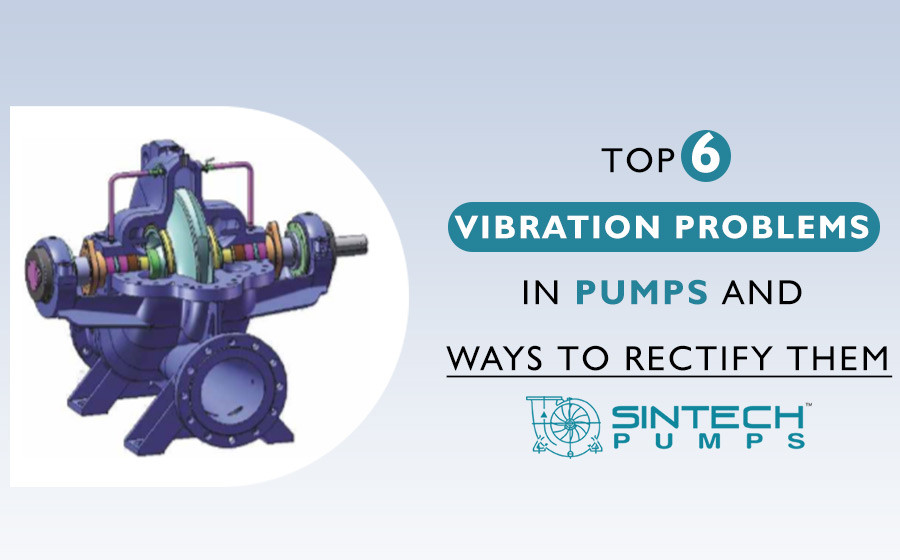
As the leading industrial pump manufacturers and exporters in India, Sintech is dedicated to providing our customers with extensive after-sales support. We have years of experience in the field and have offered clients troubleshooting help when something goes wrong with their pumps.One of the most frequent problems faced by customers is – extensive pump vibration. All pumps vibrate while in operation. However, if the vibration goes beyond permissible levels, it becomes a problem.Here, in this guide, we share the leading causes of pump vibration and tips for rectifying the issue. Let’s get started.
#1: Pump Cavitation
 Cavitation is one of the main reasons for the poor performance of a pump. It occurs as a result of an insufficient suction head. When the absolute pressure of the liquid at the impeller inlet is equal to the liquid vapour pressure, it causes the formation of air pockets that collapse when they pass via the impeller.Pump cavitation is easy to identify. If you are noticing distinctive popping sounds from the pump while in operation or hearing noises similar to rumbling rocks, you can know that your pump is facing cavitation troubles. Besides the excessive noise, the other symptoms of cavitation include frequent wear, tear, and higher power usage.How to overcome this issue?
- Use a flowmeter or pressure gauge to check if the pump is operating at the ideal pump curve.
- Re-evaluate the pump design, if it is not operating at the ideal levels.
- Check filters and strainers frequently for cleanliness.
#2: Pump Flow Pulsation
 This issue occurs when a pump is operating near the shut-off head. If this problem occurs, you can notice fluctuations in the pressure gauges on the discharge piping. Additionally, if your pump has a discharge swing check valve, the valve arm and counter-weight will move in an unstable manner.How to overcome this issue? The primary reason for pump flow pulsation is the lack of proper feed. You can eliminate this issue by using a suction stabilizer to keep the fluid touching the plunger, constantly while the pump is in operation.If this doesn’t rectify the issue, then look for other signs like:
- Leaking valves
- Improper spring rates
- Multiple pumps connected to a single header
- Worn packing
- Improper pipe designs that restrict the flow
#3: Bent Pump Shaft
 If your pump shaft is bent, then it can lead to high axial vibrations. You can notice a dominant vibration if the bend of the shaft is closer to the centre of the shaft. Very often, bent shafts can be seen near or at the coupling.How to overcome this issue? Bent pump shafts can be easily identified using dial indicators.
#4: Imbalance in the Pump Impeller
 Vibrations can occur in the pump if they are misaligned, have worn out bearings, or are facing overheating. However, the main reason for all these issues is an imbalance in the pump impeller. If you notice heat buildup in the pump, then it’s a sure sign of an impeller imbalance. Impellers must be balanced precisely, else it can take a toll on the life of the pump bearings.If the impeller is centre-hung, then it can lead to a force imbalance. If this is the case, then you can notice the highest vibrations in the radial direction. If you see extensive axial vibrations, it is an indication of a foreign object obstructing the central impeller.If the impeller is not balanced, it could lead to other significant problems like:
- Bearing failure
- Shaft deflection
- Excessive vibration
- Pump seizure
- Failure of the mechanical seals
#5: Bearing Failure
 One of the significant causes of pump vibration is bearing failure. Nearly 10 to 30% of ball bearings in pumps are not replaced on time, leading to fatigue and failure. For instance, a Sintech pump can work without any maintenance for nearly 20,000 hours. However, the bearings will have to be replaced before that.Bearing failures occur due to overload, lack of lubricants, contamination by foreign objects, overheating, weather-related corrosion, etc.How to overcome this issue?
- You can avoid bearing related issues by choosing the right bearing for the pump. Make sure to use only the bearing recommended by the pump manufacturer.
- Additionally, ensure that all bearings are regularly lubricated with specialty oils, oil mist, or grease, as recommended by the pump manufacturer.
#6: Shaft Misalignment
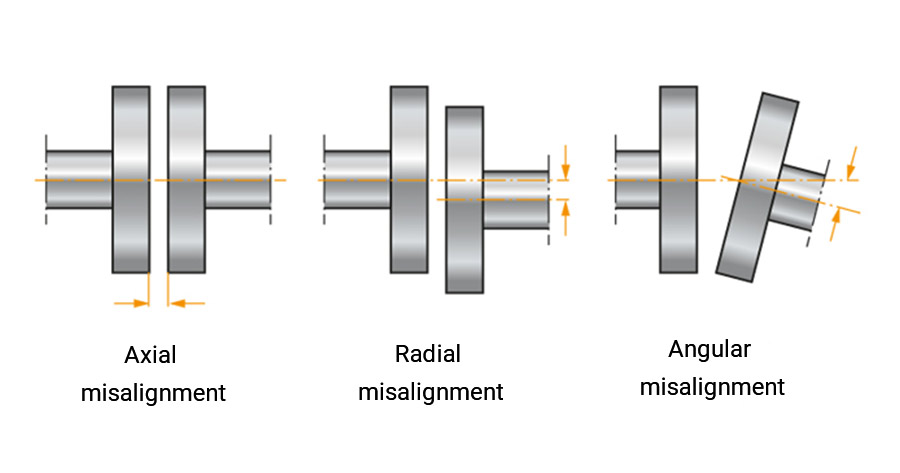 Pumps with a misaligned shaft can show any of these signs:
- Excessive oil leaks at the bearing seals
- High temperatures near the bearings and on the casing
- Excessive radial or axial vibration
- Excessive coupling failures
- Loose foundation bolts or coupling
- High temperatures on the discharge oil
- Breaking or cracking near the coupling hubs