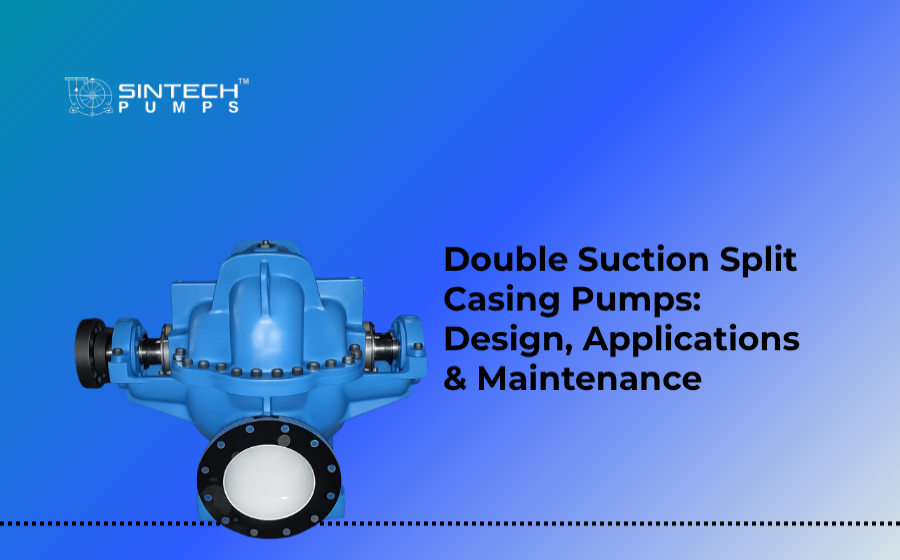
- What is the difference between a split casing pump and a double suction pump?
A split casing pump refers to the casing design, split horizontally for easy maintenance. Most split casing pumps are also double suction, meaning liquid enters the impeller from both sides. The terms overlap heavily in practice but describe different aspects of the same pump.
- Can a split case centrifugal pump handle high-pressure applications?
Single-stage split case pumps handle moderate heads efficiently. For higher pressure requirements, a 2-stage pump configuration, using two impellers in series, delivers the additional head without oversizing a single-stage unit inefficiently.
- How often should a double suction pump be inspected?
Vibration and bearing checks should happen monthly, with a full internal inspection during scheduled annual shutdowns. Continuous-duty applications like power plants or municipal water supply may warrant more frequent monitoring.
- Are split casing pumps suitable for dirty or abrasive liquids?
No. This design performs best with clean to moderately clean liquids. Abrasive, fibrous, or solids-laden fluids require a torque flow or dynamic sealing pump instead, to avoid premature wear.
- What standards should I check before buying a split case pump?
Look for compliance with ISO 2858 for dimensional standards and IS 9137 for acceptance testing. These ensure the pump’s performance claims can be independently verified against a recognized benchmark.
- Why do double-suction centrifugal pumps last longer than single-suction designs?
Double suction impellers balance axial thrust from both sides, significantly reducing the load on bearings and seals. This lowers wear rates and extends service intervals compared to single-entry impeller designs handling similar flow volumes.