
Industrial operations—whether in water supply, manufacturing, agriculture, or energy—depend heavily on efficient fluid movement, making pumps one of the most critical components of any system. From a centrifugal water pump moving vast volumes to an irrigation centrifugal pump feeding crops, or a chemical centrifugal pump handling corrosive liquids, to a slurry centrifugal pump designed for abrasive mixtures, the choice of pump directly impacts performance, cost, and reliability. Among the various types of centrifugal pump available, from stainless steel centrifugal pumps for hygienic and corrosion-prone environments to multistage centrifugal pumps used in high-pressure applications like centrifugal desalination, these machines have become indispensable across industries.Yet many engineers, operators, and students still struggle with questions like “How do centrifugal pumps work?” or “Which design is right for my application?” Without proper understanding, pump selection can lead to breakdowns, energy inefficiencies, or downtime—making it essential to grasp not only the working principle but also the role of trusted industrial centrifugal pump manufacturers in ensuring systems run smoothly.
What is a Centrifugal Pump?
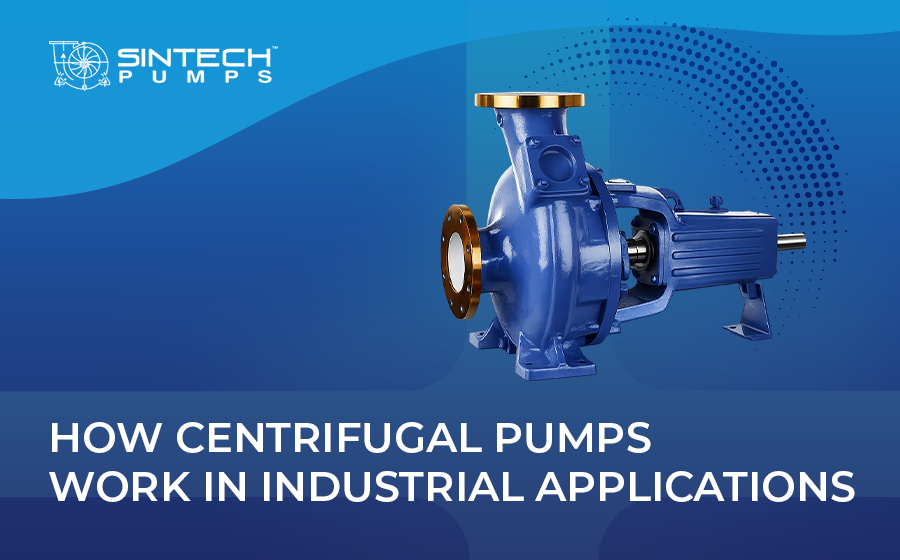
A centrifugal pump is a type of dynamic pressure pump that moves fluids by converting rotational kinetic energy into hydrodynamic energy of fluid flow. In simpler terms, it uses a spinning impeller to impart velocity to the liquid and push it outward into a discharge pipe. Centrifugal pumps are sometimes called hydrodynamic pumps because they utilize fluid dynamics (centrifugal force and fluid momentum) rather than positive displacement. They are renowned for their simple design, ease of maintenance, and ability to handle high flow rates. Because of these traits, centrifugal pumps have become one of the most common pump types worldwide, covering a wide range of flow rates and pressures.In construction, a basic centrifugal pump consists of:- Impeller: The rotating element with vanes or blades that accelerates the fluid.
- Casing (Volute or Diffuser): The stationary housing that captures fluid flow from the impeller and directs it to the discharge, converting velocity into pressure.
- Suction Inlet (Eye): The central opening through which fluid enters the pump, located at the impeller’s center (eye).
- Discharge Outlet: The exit through which fluid leaves the pump at a higher pressure.
- Shaft and Motor: The shaft connects the impeller to a motor or engine, which provides the rotational energy.
Working Principle: How Centrifugal Pumps Operate
At the heart of a centrifugal pump’s operation is centrifugal force – the outward force experienced by objects when they are spun. When the pump’s impeller rotates at high speed, it flings whatever fluid is between its blades outward from the center (imagine swinging a bucket of water in a circle; water is pushed outwards against the bucket’s sides). This simple mechanism is remarkably effective for raising liquids from a lower level to a higher level.Step-by-step Working Process:
- Fluid Entry (Suction): Fluid enters the pump through the suction inlet, ideally at the center of the impeller (the impeller eye). For the pump to start working properly, this inlet section and casing must be filled with the fluid (this is why priming is necessary, as explained below). Once the pump is running, fluid is continuously drawn in due to the low-pressure area created at the impeller’s eye when it spins.
- Impeller Action: The motor-driven shaft spins the impeller at high speed. As the impeller blades rotate, they throw the fluid outward radially at high velocity. The impeller’s vanes impart both radial and rotary motion to the liquid, essentially slinging it outward. This imparts kinetic energy (velocity) to the fluid.
- Conversion of Velocity to Pressure: Surrounding the impeller is the pump casing shaped like a widening spiral (volute) or fitted with diffuser vanes. As the high-velocity fluid exits the impeller into the volute or diffuser, the flow area gradually expands. This causes the fluid’s velocity to reduce and its dynamic pressure is converted into static pressure (fluid pressure). In essence, the casing acts like a funnel that slows down the water but builds up its pressure. By the time the fluid reaches the outer periphery of the casing, it is at a higher pressure.
- Discharge: The pressurized fluid then exits through the discharge outlet of the pump and is delivered into the discharge piping/system. From here, it can travel to the desired location in the process (be it a storage tank, irrigation network, industrial process line, etc.).
Types of Centrifugal Pumps
Centrifugal pumps exist in many designs, each suited to specific conditions. Classifications can be based on impellers, shaft orientation, or the type of fluid handled. Understanding the types of centrifugal pump helps engineers and buyers select the right solution.1. Single-Stage vs Multistage Pumps
Single-Stage Pump: With just one impeller, these are simple, cost-effective, and easy to maintain. They deliver high flow at low to moderate pressure, making them common as centrifugal water pumps for agriculture, building services, and general circulation.Multistage Pump: These use two or more impellers in series, each boosting pressure step by step. Ideal for high-head applications like boiler feedwater, firefighting, high-rise water supply, or centrifugal desalination plants. Multistage centrifugal pumps achieve high pressure efficiently without oversized motors, making them indispensable for power and process industries.2. Horizontal vs Vertical Pumps
Horizontal Centrifugal Pumps: Shaft aligned horizontally, often in end-suction or split-case designs. Favored for general industry due to easy servicing and large flow capacity. Horizontal multistage versions are common in plants and utilities.Vertical Centrifugal Pumps: Shaft aligned vertically, with impellers stacked. Includes vertical turbine, sump, and inline pumps. Chosen when space is limited or for deep-well pumping. Common in irrigation, drainage pits, and compact mechanical rooms.3. Specialized Centrifugal Pumps
Stainless Steel Centrifugal Pump: Made from SS304/316, these resist corrosion and maintain fluid purity. Widely used in food, beverage, pharma, and chemical centrifugal pump applications. They’re also important in desalination plants handling seawater.Centrifugal Water Pump: A broad category covering pumps for municipal supply, irrigation, or general industrial water transfer. Irrigation centrifugal pumps often move large volumes from canals or borewells, with options for surface-mounted or submersible installations.Multistage Centrifugal Pump (Revisited): Critical for high-pressure duties such as mine dewatering, RO desalination, and firefighting. These pumps deliver high head efficiently, supporting industries where pressurized flow is essential.Centrifugal Pumps for Desalination & Irrigation: Desalination plants use large intake pumps and multistage high-pressure units, while irrigation systems prioritize efficiency and reliability. Both demand robust construction to minimize operating costs.Chemical Centrifugal Pump: Built with resistant alloys or non-metallic linings to safely move acids, solvents, and reactive fluids. Designed with mechanical seals or seal-less magnetic drives to prevent leaks, they’re crucial in refineries, fertilizer, and process industries.Slurry Centrifugal Pump: Engineered for abrasive mixtures like ore slurry, ash, or sewage. Features include open impellers, wear-resistant casings, and slower speeds to reduce erosion. Found in mining, dredging, steel, and wastewater applications.Self-Priming & Other Variants: Self-priming designs hold fluid to restart easily after shutdown. Magnetic-drive pumps eliminate shaft seals for hazardous chemicals. Vertical sump pumps are semi-submerged, ideal for drainage and effluent.Common Types of Centrifugal Pumps and Their Applications
| Pump Type | Description & Features | Typical Applications |
|---|---|---|
| Single-Stage Pump | One impeller. Simple design, high flow at low/moderate pressure. Easy to maintain. | Water transfer, cooling water, drainage, general industry uses. |
| Two-Stage Pump | Two impellers in series. Moderate pressure increases. | Mid-range head applications (e.g., small boiler feed, intermediate pipeline boosting). |
| Multistage Pump | 3 or more impellers. High-pressure output with incremental staging. Can be horizontal or vertical. | Boiler feed water, RO desalination, high-rise building supply, firefighting systems. |
| Horizontal Pump | Shaft horizontal. Common layout for ease of maintenance. | Most industrial processes, high-flow pumps, easy-access installations. |
| Vertical Pump (Incl. Turbine) | Shaft vertical. Saves floor space, often semi-submerged designs. | Deep wells (vertical turbine), sump pumping, inline boosters in pipelines. |
| Stainless Steel Pump | Constructed in SS304/316 for corrosion resistance. Hygienic and non-reactive. | Chemical processing (acids, alkalies), Food & beverage (milk, juices), Pharma, Sea water applications. |
| Chemical Process Pump | Built per chemical standards (ISO/API/ANSI). Various materials & seals for handling chemicals safely. | Petrochemical plants, refineries, fertilizer factories, any process fluids (solvents, acids, etc.). |
| Slurry Pump / Non-Clog Pump | Heavy-duty pump with wear-resistant parts. Often open impeller or special designs for solids. | Mining slurry, mineral processing, dredging, slurry handling in agriculture, wastewater sludge. |
| Water/Irrigation Pump | Designed for high flow of water with high efficiency. Often single-stage (or multistage for long distance). | Irrigation canals, agricultural pumps, municipal water supply boosters, flood control. |
| Desalination Pump | Corrosion-resistant (often SS or duplex). Multi-stage for high pressure (RO feed) or double-suction for intake. | Seawater intake pumps, Reverse Osmosis high-pressure feed, brine circulation pumps in desalination plants. |
| Fire Pump (Centrifugal) | Typically single or multistage pumps supplying fire hydrants or sprinklers at required pressure. Often diesel-engine driven backup. | Fire protection systems in buildings, industrial fire hydrant networks. |
| Self-Priming Centrifugal | Has a built-in priming chamber to re-prime automatically. Can pump mixtures of air and water to establish prime. | Dewatering, waste water “trash” pumps (handling dirty water), applications with suction lift where priming is frequent. |
Key Industrial Applications of Centrifugal Pumps
Centrifugal pumps are truly ubiquitous in industrial and even everyday contexts. Whether the reader’s intent is to learn where centrifugal pumps are used or to find a pump for their industry, this section will provide clarity.1. Water Supply and Irrigation
One of the most common uses of centrifugal pumps is in water supply systems – from municipal water distribution to agricultural irrigation:Municipal and City Water Supply: Centrifugal pumps are used in water treatment plants and distribution networks to move clean water from reservoirs or treatment facilities to homes and industries. Typically, horizontal split-case pumps or vertical turbine pumps are used at water pumping stations. They provide the flow needed to keep up with city demand. Often these pumps are arranged in booster sets to maintain pressure in tall buildings or distant parts of the network. The reliability and simplicity of centrifugal pumps make them ideal for 24/7 operation required in public water supply. Because they can be powered by electric motors, they offer relatively quiet and efficient service. Sintech Pumps has supplied numerous pumps for water utilities – emphasizing energy efficiency and easy maintenance (since a pump failure can cut off water for thousands of people). In city water, pressures needed are not extremely high (maybe 3-10 bar), which single-stage or two-stage pumps can often handle well.Agricultural Irrigation: In agriculture, irrigation centrifugal pumps are lifelines for crops. They might draw water from rivers, lakes, canals, borewells, or storage ponds and deliver it to fields through sprinkler systems, drip lines, or open channels. Farmers often use end-suction centrifugal pumps or centrifugal monoblock pumps (where pump and motor are one unit) for small farms, and larger multistage or split-case pumps for large-scale irrigation schemes. Key considerations here are: energy efficiency (pumping water can be energy-intensive, so an efficient pump saves cost), robustness (handling sometimes sandy or silt-laden water), and ease of service. Sintech addresses these needs by offering pumps with optimized impellers for high efficiency and robust construction that reduces downtime. For remote or off-grid farms, the trend is toward solar-powered centrifugal pumps – essentially the same pump coupled with solar-driven motors or DC motors.Groundwater and Submersible Pumps: Many irrigation and water supply systems rely on borewell submersible centrifugal pumps (a type of vertical multistage pump that is lowered into a borehole). These pumps are essentially centrifugal pumps with multiple stages, designed to be slim and go deep underground. They push water up from aquifers for irrigation or drinking water. Sintech, as a pump manufacturer, produces submersible pumps as well (they mention submersible irrigation pumps that have seen success overseas). While submersibles are not visible on the surface, they quietly do the centrifugal pumping underground. This highlights how versatile the centrifugal principle is – it can be packaged in submerged form or in dry-mounted form.Why Centrifugal Pumps excel in Water/Irrigation: They provide a continuous, non-pulsating flow which is gentle on piping (important for drip irrigation lines or municipal pipes). They can handle variable flow demands – e.g., as different zones of an irrigation system open or close, a centrifugal pump can adjust (often via a pressure control or variable speed drive) to supply just the right amount, which is trickier with displacement pumps. Also, maintenance is relatively straightforward; for many irrigation pumps, cleaning an impeller or replacing a seal occasionally is all that’s needed. Sintech’s irrigation pumps are specifically noted to reduce energy costs and safeguard the water resources – meaning they aim for high efficiency (lower power per volume pumped) and reliable operation (no unexpected failures that could lead to water waste or crop damage). They even integrate slurry handling in farming (like pumps for liquid fertilizer or waste), showing a holistic approach to farm water solutions.2. Desalination and Water Treatment
In an era of water scarcity, desalination plants have become crucial in converting seawater to potable water. Centrifugal pumps play multiple critical roles in these facilities:Seawater Intake Pumps: These are often large double-suction centrifugal pumps located at beachfront or on jetties, drawing huge volumes of seawater from the ocean and feeding it into the desalination plant. They must handle sand, marine organisms, and saltwater corrosion. Pumps like Sintech’s double suction split-case pumps are ideal here due to their high capacity and low NPSH requirements (meaning they can suck water with minimal risk of cavitation). Materials are usually corrosion-resistant (bronze or duplex stainless). The pumps run continuously to supply the plant’s feed. A failure here stops the entire plant, so reliability is paramount – Sintech Pumps emphasizes long lifecycle and low maintenance for such pumps.High-Pressure RO Feed Pumps: In Reverse Osmosis (RO) desalination, after pre-treatment, water is forced through membranes at very high pressures (typically 50-80 bar for seawater RO). These pressures are achieved by multistage centrifugal pumps or advanced axial piston pumps. Centrifugal multistage pumps have been a backbone of RO systems because they can generate the high pressure in a single machine. Often, specialized high-pressure pump skids with energy recovery devices are used (to recapture energy from the brine flow). Sintech Pumps offers pumps for desalination that are “efficient and economical” – key descriptors for RO feed pumps since energy consumption is the biggest operational cost. The efficiency of the pump directly impacts how many kWh per cubic meter of water the plant consumes. Modern RO centrifugal pumps are highly engineered for efficiency (>80% typically) and built with super duplex stainless steel to resist chloride corrosion.Brine Circulation and Auxiliary Pumps: Desalination plants also use centrifugal pumps to circulate water in various stages – e.g., brine recirculation pumps, backwash pumps for filters, chemical dosing pumps (small centrifugal or side-channel pumps), product water transfer pumps, etc. Each of these is a centrifugal pump sized for its task. For example, backwash pumps flush filters with a surge of water, requiring high flow for short durations – a perfect job for centrifugal pumps that can ramp up flow when needed.Water Treatment Plants: Aside from desalination, general water treatment (like wastewater treatment or drinking water treatment plants) also rely on centrifugal pumps. Wastewater pumps (to pump sewage) are often centrifugal – either submersible or dry-installed non-clog pumps (with impellers that pass solids). Chemical dosing pumps in treatment can sometimes be small centrifugal pumps (though metering pumps are more common). Sludge pumps to move thick sludge are a type of centrifugal slurry pump. All of these ensure water can be moved through various treatment stages (aeration, filtration, sedimentation, etc.). The key in such applications is often non-clog performance and material compatibility. Sintech Pump’s line-up includes pumps for Water and Wastewater Industry and Zero Liquid Discharge systems, showing their involvement in making sure water, once used, can be treated and recycled using the right pump technology.3. Chemical and Process Industries
In chemical, petrochemical, and general process industries, centrifugal pumps are indispensable for moving various liquids, from solvents to acids, and oils to resins. They serve in countless process steps:Chemical Transfer and Circulation: Whether it’s pumping sulfuric acid in a fertilizer plant, circulating cooling glycol in a chemical reactor, or transferring vegetable oil in a refinery, there’s likely a centrifugal pump doing the job. These industries often require pumps to meet standards (like ISO 5199/2858, API 610 for oil & gas, ANSI for chemical). Centrifugal pumps for these services are typically called process pumps. They are built with chemical-resistant materials (stainless steel, Hastelloy, or with protective coatings) and designed to handle a range of temperatures and pressures. Many are single-stage end-suction pumps, as they provide the best reliability and ease of maintenance (with back pull-out designs to service without disturbing piping).High Temperature and Special Fluids: In refineries and petrochemical plants, pumps might handle hydrocarbons at high temperatures or even boiling liquids. Here, heavy-duty centrifugal pumps (often following API 610 standard) are used, with features like centerline mounting (to handle thermal expansion) and special seal systems. Sintech’s pumps adhere to such international standards and incorporate design features for robust service. For instance, they mention meeting ISO 5199, which ensures the pump can take some pipe stress and operate continuously in process environments.Paints, Cellulose, and Petrochemicals: Centrifugal pumps are used in paints manufacturing, cellulose making, and petrochemical processes. In paints, pumps mix and transfer liquids with pigments (maybe needing an open impeller to handle solids). In cellulose or paper pulp processes, certain stock pumps (with large clearances to handle pulp fibers) are centrifugal. Petrochemical processes rely on many centrifugal pumps for feed, circulation, and product transfer.Pharmaceuticals and Food: These can be considered part of process industries. They often use sanitary centrifugal pumps (with stainless steel, and easily cleanable designs). A pharmaceutical plant might use a centrifugal pump to transfer syrups or purified water, and it must be easy to sterilize. Similarly, dairy and beverage industries use centrifugal pumps (like centrifugal milk pumps) that are made of polished stainless steel and have gentle pumping action to not damage the product. These are designed to avoid dead spots (for bacterial growth) and can be disassembled for cleaning (CIP/SIP – Clean in Place/Sterilize in Place).Advantages in Chemical Use: Centrifugal pumps have the advantage of flow stability which is important in reactors (steady circulation yields consistent reaction). They can also be sealed well to prevent leaks of toxic fluids (double mechanical seals, etc., or magnetic drive designs). Many chemical pumps can run at variable speeds to control flow as process demands change. This flexibility plus the robust design (few moving parts to fail) is why industries trust centrifugal pumps for critical duties.4. Mining, Slurry, and Heavy-Duty Applications
Mining and heavy industries present some of the toughest challenges for pumps: abrasive slurries, remote locations, and the need for absolute reliability (flooded mines or halted production can cost millions). Centrifugal pumps rise to these challenges in various forms:Mine Dewatering: Keeping mines (especially underground mines) free of water is critical. Multistage centrifugal pumps are often used to pump water out from deep underground sumps up to the surface. They need high pressure (to overcome the vertical distance) and rugged design (water can be dirty or acidic). Additionally, portable diesel-driven centrifugal pump units are often used in open-pit mines to drain rainwater or seepage.Slurry Handling in Mining: When ores are processed (e.g., grinding rock into slurry for mineral extraction), slurry pumps come into play. These are a subset of centrifugal pumps specialized for heavy, abrasive mixtures. For instance, in a gold mine, a slurry pump might move a mix of crushed ore and water from a grinding mill to a separation circuit. The pumps have thick volutes, replaceable liners, and often expeller mechanisms to keep solids from the shaft seal.Steel and Cement Industries: Heavy industries like steel mills or cement plants also use centrifugal pumps extensively – for cooling water, for pumping slurries like lime slurry, for circulating water in quenching processes, etc. Fly ash slurry in power plants (for ash handling) is another tough service for centrifugal slurry pumps.The common thread in all these heavy-duty uses is that downtime is not acceptable. A mine that cannot pump water will flood; a processing plant that can’t move slurry will choke. Therefore, the pumps must be robust and usually have backups. Sintech Pumps caters to these industries by providing heavy-duty, rugged pumps that can withstand corrosive and abrasive fluids. They also stress interchangeability and easy availability of spares, so that if wear parts need replacement (which is inevitable in slurry service), it can be done quickly to resume operations. This level of support is a key reason industries pick established manufacturers like Sintech Pumps over cheaper, unproven pumps.5. Power Generation and Firefighting
Lastly, two important sectors where centrifugal pumps are crucial:Power Generation (Thermal Power Plants): In coal, gas, or nuclear power plants, boiler feed pumps (BFPs) are among the most critical pumps. These are usually high-pressure multistage centrifugal pumps that feed water into boilers at high pressure (even up to 200+ bar in supercritical coal plants). They often have to handle very hot water. BFPs are typically specialized (sometimes turbinedriven), but multistage centrifugal design is a norm. Sintech Pump’s multistage pumps can cover some lower pressure boiler feed or high-pressure water circulation needs, while extremely high pressures might use API class pumps. Aside from BFPs, power plants have many auxiliary centrifugal pumps: circulating water pumps for cooling (very large axial flow or mixed-flow centrifugal pumps to circulate cooling water from cooling towers or water bodies), condensate pumps (multistage vertical can pumps handling hot water with low NPSH), cooling tower feed pumps, ash handling pumps (slurry pumps for fly ash), and firewater pumps for plant fire protection. Sintech being a supplier to power industries, indicates they provide solutions like cooling water pumps (which might be their horizontal mixed-flow pumps line) or condensate pumps that require special low NPSH impellers. Efficiency in these pumps is critical because power plants move enormous volumes of water (especially cooling water circuits).Firefighting Pumps: Fire pumps are centrifugal pumps that supply water to sprinkler systems, fire hydrants, or standpipes. In high-rise buildings or large facilities, a fire pump ensures that water at sufficient pressure reaches all points of the fire protection system. These pumps are often designed per NFPA standards and can be driven by electric motors or diesel engines (for backup if power fails during a fire). Single-stage end suction, horizontal split-case, or multistage vertical turbine pumps are common fire pump types. The required pressure depends on building height and network design. What matters is reliability – fire pumps are tested regularly but only run in emergencies, so they must start instantly and perform flawlessly when called upon..This overview of applications illustrates why centrifugal pumps are so widely used – they can be engineered to fit almost any fluid service, from the cleanest drinking water to the heaviest slurry, from tiny flows in a lab to millions of liters per hour in a city water main. Their scalability and adaptability are unmatched.Advantages of Centrifugal Pumps in Industry
- Simplicity and Reliability: With few moving parts, centrifugal pumps offer dependable performance, low maintenance, and long service life in critical operations.
- Wide Range of Operation: They can handle everything from low flow to very high flow and pressure needs, with flexible designs like single-stage and multistage centrifugal pumps.
- Smooth Flow, Low Pulsation: Continuous discharge ensures stable system performance, reduces stress on pipelines, and minimizes vibration or noise.
- Efficiency and Energy Savings: Properly selected pumps achieve 70–90% efficiency, cutting electricity costs and supporting sustainability goals.
- Low Maintenance Costs: Easy servicing, standard spare parts, and features like back pull-out design minimize downtime and reduce operational expenses.
- Safety and Environmental Benefits: Built-in slip reduces pressure risks, while seals and magnetic drives ensure safe handling of hazardous fluids.
- Cost-Effectiveness: Lower upfront cost, high durability, and reduced lifetime expenses make centrifugal pumps a cost-efficient choice for industries.
Conclusion
Centrifugal pumps remain the backbone of countless industrial applications, delivering the performance, adaptability, and reliability required to move fluids efficiently in sectors as diverse as water supply, agriculture, desalination, manufacturing, and chemical processing. The essential lesson for businesses and engineers is to match the pump carefully to the operating requirements—considering factors like flow rate, pressure, and the nature of the fluid—while also working with an experienced manufacturer that can provide not just high-quality pumps but also the technical guidance and after-sales support necessary for long-term success. A well-chosen solution, whether it is a stainless steel centrifugal pump, a multistage centrifugal pump, or a specialized slurry or chemical centrifugal pump, ensures lower operational costs, safer processes, and longer service life, ultimately protecting productivity and profitability while keeping critical operations running smoothly.Ready to optimize your fluid-handling systems? Contact Sintech Pumps today to discuss your requirements, explore the right solution, and get expert guidance for your next project.FAQs
1. What are the industrial applications of centrifugal pumps?
Centrifugal pumps are used across industries for water supply, power generation, mining, and chemical processing. A centrifugal water pump handles irrigation and utilities, while a chemical centrifugal pump ensures safe chemical transfer. Slurry centrifugal pumps move abrasive mixtures in mining and steel, and multistage centrifugal pumps drive high-pressure systems like boiler feed or centrifugal desalination plants. Trusted industrial centrifugal pump manufacturers provide specialized solutions for each application.2. Why are centrifugal pumps mostly used in the industry?
Centrifugal pumps dominate industry because of their simple design, efficiency, and adaptability. From an irrigation centrifugal pump delivering large volumes, to a stainless steel centrifugal pump resisting corrosion, or a slurry centrifugal pump built for heavy-duty solids, each design addresses unique challenges. Multistage centrifugal pumps generate high pressures for desalination and fire systems. Their versatility makes them the top choice among industrial centrifugal pump manufacturers worldwide.3. What are the three types of centrifugal pumps?
- Single-stage pumps for general water transfer and agriculture.
- Multistage centrifugal pumps for high-pressure duties like centrifugal desalination, boiler feed, and firefighting.
- Specialized pumps such as chemical centrifugal pumps for corrosives or slurry centrifugal pumps for abrasive fluids. Leading centrifugal pump manufacturers also offer variants like stainless steel centrifugal pumps for food and pharma, ensuring safe, reliable performance.