Table of Contents
- Introduction
- What Is a Vertical Sump Pump?
- How Do Vertical Sump Pump Work?
- Key Features of Vertical Sump Pump
- Benefits of Vertical Sump Pump in Mining
- Applications of Vertical Sump Pump in Mining
- Choosing the Right Vertical Sump Pump
- Installation and Maintenance Tips
- Why Choose Sintech Pumps
- Conclusion
- FAQs
Introduction
Mining operations constantly battle unwanted water in pits, sumps, and tunnels. Excess moisture can derail even the best-laid mining plans
, by flooding working areas, damaging equipment, and creating safety hazards. In heavy rain or groundwater inflow, the risk of downtime and accidents rises if sump water isn’t managed effectively. The solution is a reliable dewatering system that pumps out slurry-laden water before it causes problems. Vertical sump pumps are
designed for exactly this task – they lift water and slurry out of deep pits while keeping the motor and bearings safely dry. Sintech Pumps, a leading Indian pump manufacturer, offers heavy-duty vertical sump pump
engineered for the harsh conditions of mining sumps. Sintech’s designs (STFV and CPSV series) feature compact, dry-mounted motors and robust shafts, providing ready-to-use, submersible impellers with no priming required
. For example, Sintech’s vertical sump pumps can dewater water contaminated with solids, raw sewage, slurry, and industrial effluent efficiently.By choosing a vertical sump pump
tailored for mining, you ensure continuous, trouble-free drainage from sumps and pits. If you’re facing persistent sump drainage
issues, Sintech Pumps can help – contact us to discuss custom dewatering solutions backed by India’s pump technology expertise.What Is a Vertical Sump Pump?
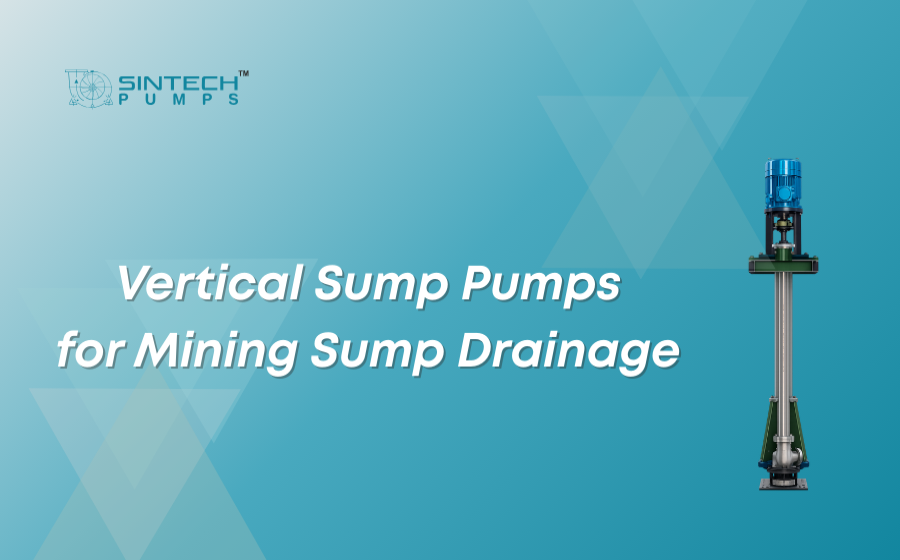
A vertical sump pump is a type of centrifugal pump built for installation in pits, sumps, or wet wells. Its drive shaft is oriented vertically so that the pumping end (impeller and casing) is submerged in the fluid
, while the motor and bearing assembly remain above the liquid, dry and accessible
. In simpler terms, the pump “hangs” down into the pit: the impeller churns the water at the bottom, and the motor sits on top, out of the water.This configuration distinguishes it from a submersible pump
(where the entire pump and motor sit underwater) and from a standard horizontal pump. One way to think of it: in a vertical pump, the motor stays dry above the fluid, whereas in a submersible pump the motor is submerged. Vertical sump pump
s can also be called submersible vertical pumps, vertical sewage pump
s, or simply sump tank pump
s, depending on the use. Sintech’s vertical sump pumps (models STFV, CPSV) are specifically designed for sump and tank installation.Because the impeller and casing are always flooded
, vertical sump pump
s maintain a constant suction head and normally do not require priming
. This makes them ideal for sump drainage: as soon as power is on, the pump begins to discharge fluid immediately. Sintech’s design emphasizes this advantage – the impeller is fully submerged so “no priming or air venting is required”. In short, a vertical sump pump is the go-to solution when you need to remove water or slurry from a deep pit or tank without fuss.How Do Vertical Sump Pump Work?
The operation of a vertical sump pump
is straightforward yet rugged. The electric motor (or drive) sits on a dry mounting plate above the sump. A long vertical shaft
extends down from the motor into the sump, terminating in an impeller at the bottom. When the motor spins, it drives the impeller at high speed. The spinning impeller generates a centrifugal force that draws liquid in from above the impeller and throws it outward
, creating a flow of fluid up the discharge.Key points of operation:- Submerged Wet End: The pump’s wet end (impeller and volute) is submerged in the sump liquid. Because it remains flooded, the pump sees a positive suction head at all times. This “flooded suction” eliminates cavitation problems and allows the pump to self-prime.
- Cantilevered Shaft: Most vertical sump pumps use a cantilevered shaft design. This means the impeller is mounted on the end of a long shaft that is supported above the fluid level. There are no submerged bearings or shaft seals below the mounting plate, so the fluid doesn’t contact the bearings or the motor.
- Dry Motor and Bearings: Since the bearings and motor stay above the liquid level, they run in clean air, not slurry. This greatly extends their life. As one expert notes, this design “ensures that bearings are located above the liquid level, protecting them from contamination and extending their lifespan”. In practice this means far less wear on the drive components.
- Agitation (Optional): Some vertical sump pumps include an optional agitator at the suction inlet. When solids or settled sludge may clog the pump, the agitator stirs the fluid to keep solids in suspension. This prevents clogging and reduces wear.
Because of the vertical layout, the pump’s motor is never in contact with the slurry. The pumped fluid is lifted vertically up through a discharge pipe. The continuous submerged operation and robust construction let vertical sump pump
s run effectively in heavy slurry and abrasive flows. In short, a vertical sump pump
works by spinning an impeller below water while isolating the motor above water, giving you reliable suction and discharge in harsh mine sump conditions.Key Features of Vertical Sump Pump
Modern vertical sump pump
s incorporate several design features that make them ideal for mining sump drainage
:- Cantilevered Shaft (No Submerged Bearings): The impeller is on a long shaft that’s supported above the fluid. This cantilevered design eliminates submerged bearings and shaft seals. Without submerged seals, there is little chance of slurry leaking into the drive. As a result, maintenance is reduced and pump life is extended.
- Abrasion-Resistant Construction: The wear parts (impeller, casing, liners) are made of high-chrome alloy metals or rubber linings to resist wear from sand and slurry. For example, heavy-duty vertical sump pumps often use high-chromium white iron or stainless steel in the impeller and volute. These materials withstand the “relentless abrasive action” of ore slurry and tailings.
- Submersed Wet-End with Flooded Suction: Since the impeller and casing are fully submerged, the pump maintains a flooded suction. This means no priming is needed, and cavitation is virtually eliminated. (Sintech points out that the submerged impeller “does not require to be primed and is always ready for use”.)
- Dry-Section Motor & Glandless Design: The motor sits above the sump on a dry mounting plate. Many vertical sump pumps use a glandless design (no stuffing box or packing), further simplifying maintenance. Sintech’s models, for instance, are “screenless, chockless and glandless,” meaning no gland seal water is needed. The dry motor also means the pump can handle higher-temperature fluids without overheating the drive.
- Space-Saving Footprint: Vertical pumps take up minimal floor space since the fluid is lifted up rather than pushed along a horizontal axis. This compact vertical orientation is a big advantage in crowded pump rooms or filter pits.
- Heavy-Duty Shafts and Robust Assembly: The shaft is extra-heavy to withstand the long overhang and heavy loads. Sintech’s vertical sump pumps, for example, use an “extra heavy shaft” capable of supporting the submerged impeller under tough conditions.
These features combine to make vertical sump pump
s exceptionally robust and reliable
. In mining applications, where fluids are often corrosive and full of solids, such heavy-duty design is critical. (For example, vertical sump pump
s in mining can handle slurry concentrations up to 70% solids by weight.) The net result is a pump that can run in harsh sludge without frequent seal failure or downtime.Benefits of Vertical Sump Pump in Mining
Choosing a vertical sump pump
for mining sump drainage
offers many advantages:- Handles Abrasive & Dirty Fluids: These pumps are built for slurry. Heavy wear parts and no vulnerable seals mean they can run on sludge, sediment-laden water, sewage, or slurry for long periods. Vertical sump pumps in mining “are indispensable for handling highly abrasive slurries containing ore concentrates, tailings, and process water”.
- Reliability and Uptime: With bearings kept dry and the pump always flooded, vertical sump pumps avoid common failure modes. There’s minimal risk of cavitation or bearing washout. As one technical source notes, this design “mitigates common operational issues associated with abrasive slurries, offering superior reliability and reduced downtime”. In practice, this means less unexpected maintenance and more consistent pumping.
- Low Maintenance Needs: No submerged shaft seals means fewer wear items. Routine maintenance is often limited to inspecting and replacing the impeller, volute liners, and bearings on a schedule. Sintech’s pumps even have no glands or packing, cutting out a maintenance point. Overall, a vertical sump pump can run for months between overhauls in conditions that would quickly destroy a horizontal pump with seals.
- Always Ready for Service: Because the impeller is already submerged, vertical sump pumps maintain a flooded suction. They “do not require priming”. This means they can start pumping immediately when turned on, an important feature when unexpected flooding occurs. There’s no separate priming procedure or risk of losing prime in the pit.
- Space and Layout Advantages: The vertical orientation conserves space. You don’t need long horizontal runouts; the pump drops straight down into the sump. This is especially useful underground or in retrofit situations. The compact footprint also makes it easier to place multiple pumps in a small area.
- Adaptability to Conditions: Vertical sump pumps can operate under low NPSH (net positive suction head) conditions because the liquid column provides constant suction head. They can run dry for short periods (in some designs) without damage. And since the motor is on the surface, high-temperature fluids can be pumped without overheating issues.
All these benefits mean fewer downtimes and lower cost of ownership
. You get a pump that works hard in dirty fluids and stays running. For mining operations, that translates into safer, more efficient dewatering.Applications of Vertical Sump Pump in Mining
In mining and related industries, vertical sump pump
s are used in many critical roles:- Pit and Sump Dewatering: Removing water from open-pit mine sumps and underground pit bottom sumps to keep mining faces dry and safe. This includes pumping out rainwater or groundwater that accumulates in excavations.
- Slurry and Tailings Transfer: Conveying heavy ore slurries and tailings from one location to another. Vertical sump pumps can lift dense mixtures of ore fines and water from a collection pit into a pipeline or into processing equipment. They can handle solids and sand-laden fluids that would clog other pumps.
- Ash and Byproduct Handling: In mining power plants (e.g. coal-fired), vertical pumps drain ash slurry, sludge, and flue-gas treatment wastewater from pits. Their abrasion-resistant design suits the silty mixtures found in ash ponds.
- Industrial Wastewater & Sewage: Pumps dealing with raw sewage, sludge or effluent in mining facilities. A vertical sewage pump is a type of vertical sump pump designed for municipal or industrial wastewater. It can lift sewage from a sump pit up to treatment.
- General Drainage Pumps: Handling drainage water in tunnels, mining camps, processing plants, or wash bays. Anywhere a heavy-duty drainage pump is needed in a deep pit, a vertical sump design applies.
In short, vertical sump pump
s perform the “worst job”
of pumping heavy, abrasive, and often corrosive fluids. They are commonly chosen for floor and pit sumps
in process plants and mining operations due to their resilience. For example, one manufacturer notes they are ideal for “floor sumps in process plants, mill scale pumping, and pumping of machine tool cuttings and wood chips” because of their ease of maintenance in dirty service. In the mining sector specifically, these pumps “are indispensable for handling highly abrasive slurries containing ore concentrates, tailings, and process water”.Vertical sump pump
s are also popular in coal mines, iron ore processing, copper mines, and other heavy industries. Essentially, any application involving heavy solids in liquid will benefit from a vertical sump pump
. For miners looking to dewater pits or move slurry, vertical sump pump
s are a tried-and-true solution.Choosing the Right Vertical Sump Pump
Selecting the best vertical sump pump
for a mining application involves matching the pump’s capabilities to the site’s requirements. Key factors include:- Flow Rate and Head: Determine how much volume you need to move and how high the pump must lift the liquid. Vertical sump pumps can cover a wide range; for example, heavy-duty models can handle flows from 10 up to 800 m³/hr and heads from 5 to 60 meters or more. Ensure the pump’s performance curve meets your system’s flow and discharge head.
- Solids Concentration and Particle Size: If the mine water contains high slurry concentrations (e.g. > 30% solids) or large particles, choose a pump designed for high-solids duty. Some vertical slurry pumps handle up to 70% solids by weight. Also consider impeller style: large-vane or vortex impellers for large solids, open or semi-open impellers for abrasive mixes. Sintech offers both closed and semi-open impeller designs to suit different slurries.
- Fluid Abrasiveness and Corrosiveness: For highly abrasive slurries (like quartz sand or ore), specify wear-resistant materials. High-chrome alloys (ASTM A05, A49, etc.) or rubber linings can greatly extend wear life. If the sump water is also corrosive (acidic or salty), stainless steels (304, 316L) or duplex stainless are wise choices. Sintech’s pumps can be lined with rubber or made from high-chrome metal to resist abrasion.
- Temperature: Standard vertical pumps handle up to ~80–100°C. If the fluid is hotter (e.g. hot process water), make sure both the motor and wet-end materials are rated for the temperature.
- Sump Depth and Mounting: The shaft length must reach the deepest required point. Vertical pumps can be customized (up to 6m shafts or more) to fit your sump depth. Decide whether the pump will be top-suction (mounted inside the sump) or bottom-suction (mounted outside with suction pipe down), as Sintech offers both inside-tank and outside-tank versions.
- Power and Motor: Choose a motor that provides sufficient power (kW) for the pump’s duty point. Also consider motor efficiency, as pumping slurry can consume a lot of energy. High-efficiency motors (and optionally variable frequency drives) can save energy in the long run.
- Certifications and Standards: Ensure the pump meets any required standards (e.g. ISO 9001 manufacturing quality). For mining, compliance with local regulations (like India’s BIS or CPCB standards for effluent discharge) may be relevant.
In practice, working with an experienced pump supplier is critical. Sintech Pumps, for example, has in-house engineering to help customize
the pump for your needs. They can advise on material choices and pump size, and even assist with sump design. As one expert writes, “selecting the appropriate pump size and material selection is vital” and requires analyzing the slurry’s composition. Sintech’s team can guide you through these questions.Ultimately, the right vertical sump pump is one specified for your exact slurry type, flow requirement, and site conditions. It should be designed to run continuously in a mining environment without special handling.Installation and Maintenance Tips
For best results from your vertical sump pump
system, consider these practical tips:- Proper Sump Design: The sump or pit should be sized so that the pump inlet stays immersed at all times. Sloped sides or a settling basin can help concentrate solids away from the pump, and a screen or trash rack can prevent large debris from clogging the impeller. If using multiple pumps, arrange them to balance flow. (Sintech offers sump design consultancy services to optimize pit layout.)
- Avoid Air Entrainment: Ensure the pump stays flooded. Air pockets can cause losses in suction. If the sump can run low, an automatic level controller can switch pumps on/off to maintain liquid level.
- Check Alignment and Couplings: When installing, make sure the motor-shaft coupling is straight and secure. Misalignment can cause vibration and reduce bearing life.
- Regular Wear Inspection: Schedule periodic inspections of wear parts. Check the impeller and volute for erosion or cavitation pitting, especially if pumping coarse slurry. Sintech recommends replacing wear liners or impellers before they fail; their designs allow easy replacement of these parts.
- Lubricate Bearings: Although bearings are dry and accessible, they still need lubrication. Follow the manufacturer’s schedule for grease or oil changes in the thrust bearings and motor bearings.
- Monitor Performance: Keep an eye on pump performance (flow, head, power draw). A drop in flow or rise in power can signal wear or blockage. Maintaining a performance log helps predict when an overhaul is due.
- Maintain Dry-Section: Keep the motor and drive components clean and free of moisture or dust. Although they are above the sump, they are often in a damp environment. Inspect motor seals and vents.
By following these guidelines, you’ll maximize pump life and efficiency. Sintech also emphasizes easy installation
: their vertical sump pumps come ready-to-run with minimal piping. For example, one model’s description notes “pump does not require to be primed and is always ready for use”. This means less downtime at startup.Why Choose Sintech Pumps
When choosing a pump supplier, Sintech Pumps stands out for mining applications. Sintech is one of India’s largest pump manufacturers
, with extensive experience designing industrial pumps. Based in Pune, Sintech offers in-house engineering, manufacturing, and testing of pumping solutions. In fact, “we manufacture all pumping stations in house from design through to assembly and testing,” ensuring quality control at every step.Sintech’s Consultancy and Sump Design
services can help configure your entire dewatering system – from pit layout to pump selection. Their vertical sump pump
s (STFV, CPSV series) are built to Indian standards and are proven in local mining and industrial plants. By working with Sintech, customers benefit from:- Local Expertise: Support from an Indian team familiar with local mine conditions and regulations.
- Quality & Compliance: Pumps built to international and Indian standards with rigorous quality checks.
- Full Support: End-to-end service, from pre-sales consulting to installation guidance and after-sales service. Sintech provides technical advice on fluid properties, materials, and controls to ensure the pump fits your needs.
- Strong After-Sales: Spare parts, maintenance, and warranties backed by a large domestic firm. Sintech’s focus on customer support means reliable service throughout the pump’s lifecycle.
In short, Sintech Pumps delivers turnkey pump solutions
. For demanding mining dewatering tasks, choosing a Sintech vertical sump pump
means getting an engineered solution – not just a component. To discuss your drainage challenge and get a custom pump recommendation, contact us.Conclusion
Vertical sump pump
s are the workhorses of mining dewatering. Their vertical, cantilevered design, submerged impeller, and dry motor make them uniquely suited for pumping abrasive, slurry-laden fluids from deep pits. By installing a quality vertical sump pump
, mine operators can prevent flooding, reduce downtime, and protect equipment and workers
. With heavy-duty construction and flooded suction, these pumps solve the toughest drainage challenges.Sintech Pumps’ vertical sump pump line is built with mining in mind – robust materials, easy maintenance, and Indian manufacturing quality. If you need to keep a mine pit or tunnel dry and productive, Sintech has the expertise and products to help. Contact us
to learn how our vertical sump pump
s can optimize your mine dewatering system. Our team can guide you through pump selection, design the sump layout, and provide reliable after-sales support for long-term performance.Regardless of whether you call it a vertical sump pump
, vertical sewage pump
, or submersible vertical, the goal is the same: safe, efficient drainage of heavy slurry
. With the right pump in place, your mining operation can stay on schedule and on budget. Contact Sintech Pumps today to get started with an expert sump drainage
solution. FAQs
Q.1 What is the purpose of a drainage sump pump?
A drainage sump pump, such as a vertical sump pump
or sump tank pump
, is designed to remove water, slurry, or wastewater from deep pits and low-lying areas. It prevents flooding and supports continuous sump drainage
in industrial and mining settings. These drainage pumps
maintain safety and system performance by keeping work zones dry and operable.Q.2 What are the different types of pumps used in mining?
Mining operations use various pumps, including vertical sump pump
s, submersible pump vertical
designs, centrifugal slurry pumps, and sewage pump
s. Sump pump vertical
configurations are ideal for dewatering deep pits, while water sump pump
s manage clean fluids. Each type supports mining drainage, slurry transport, or wastewater removal based on fluid composition and site needs.Q.3 What is a sump pump used for?
A sump pump, like a vertical sump pump
or vertical sewage pump
, is used to evacuate unwanted water or slurry from pits, tanks, or sumps. Common in mining, construction, and wastewater facilities, it ensures effective sump drainage
. Submersible pump vertical
types are especially efficient when installed directly in submerged conditions for uninterrupted pumping.Q.4 What are the different types of sump pumps?
Sump pumps
come in several types: vertical sump pump
s, submersible pump vertical
models, pedestal pumps, and sewage pump
s. Vertical sump pump
designs feature dry-mounted motors above the fluid, ideal for abrasive conditions. Submersible types sit entirely underwater, while pedestal and water sump pumps
are suited for general household or light industrial sump drainage.