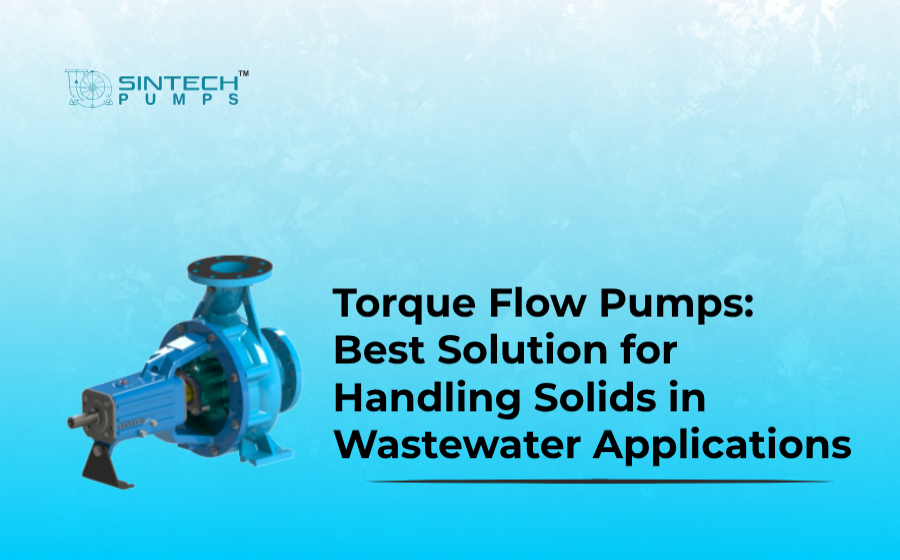
Every plant manager who has dealt with a pump clog at 2 AM understands the real cost, not just downtime, but repairs, replacements, and operational stress. Most conventional flow pumps are designed for clean or lightly contaminated liquids. The moment rags, grit, fibrous waste, or abrasive solids enter the system, these flow pumps begin to fail, working against the very process they are meant to support.This is where choosing the right technology becomes critical. In demanding environments like wastewater treatment, slurry transfer, and sludge handling, reliability is everything. Among the many options available, torque flow pumps have consistently proven to be one of the most dependable solutions. Unlike traditional designs, a torque pump is built specifically to handle heavy solids without clogging or excessive wear.What makes torque flow pumps stand out is their recessed impeller design, which creates a vortex that efficiently moves fluids and solids. This allows even difficult materials to pass through without direct contact with the impeller, reducing damage and minimizing downtime. Compared to standard flow pumps, this design offers significantly lower maintenance and longer service life.For industries dealing with complex and solids-laden fluids, a well-designed torque pump is not just an upgrade; it’s a smarter, more resilient approach. It’s no surprise that torque flow pumps are increasingly becoming the preferred choice where performance, durability, and peace of mind matter most.
Why Conventional Pumps Fail When Handling Solids?
In real-world wastewater environments, pumps are constantly exposed to abrasive particles, fibrous materials, and unpredictable solid loads. A typical slurry pump, non-clog pump, or sludge pump may work well under controlled conditions, but challenges arise when solids become irregular, sticky, or oversized.How Standard Centrifugal Pumps Clog with Solids?
Most traditional centrifugal designs rely on closed or semi-open impellers. When solids enter the system, they tend to lodge between the impeller vanes. This leads to clogging, reduced efficiency, and eventual pump failure. Over time, abrasive particles erode internal components, while fibrous materials wrap around the shaft, damaging seals.Even advanced flow pumps designed for solids handling often struggle with mixed waste streams. This is especially true in municipal and industrial systems where variability is the norm. The result is frequent downtime, high maintenance costs, and reduced operational confidence.What Is a Torque Flow Pump? The Recessed Impeller Explained
A torque flow pump solves the solids problem at the design level, not through workarounds. The fundamental difference is the position of the impeller. In a standard centrifugal pump, the impeller sits within the flow path right where all the fluid and solids must pass. In a torque pump, the impeller is completely recessed behind the casing inlet, outside the main flow path.This is not a minor design variation. It completely changes how the pump interacts with the fluid being pumped.The Recessed Impeller: How It Handles Solids Without Clogging?
Because the impeller sits behind the casing inlet in the torque flow pump, fluid and solids move through the pump body without making contact with the impeller itself. The impeller spins in its recessed chamber and creates a torque-driven vortex, a rotating energy field that draws fluid and solids through the pump by indirect hydraulic action.The result is that solids never touch the impeller. They are not cut, crushed, sheared, or caught between vanes. They simply flow through. Large solids, stringy materials, soft solids like food waste or biological sludge all pass through without affecting the impeller or the casing in the same way that contact-based designs would allow.This means no clogging. No abrasive wear on the impeller. No fibrous material wrapping around the shaft seal. And when solids are soft or fragile, such as biological flocs in a sludge pump application, the non-contact design means they arrive at the discharge point intact, which matters in certain treatment processes.The torque pump offers lower hydraulic efficiency than a standard closed impeller design. That is a fair trade. For any application where solids are present, the efficiency lost is far less costly than the downtime, wear, and repair cycles that a conventional pump would generate.Why Torque Flow Pumps Excel in Wastewater?
1. Designed for Unpredictable Wastewater Conditions
Wastewater systems are highly variable, often containing fibrous materials, abrasive solids, and debris. Most conventional flow pumps struggle under these conditions, leading to frequent clogging and inefficiency. In contrast, torque flow pumps are specifically engineered to handle such variability with ease. A well-designed torque pump ensures consistent performance even when the nature of the fluid changes unexpectedly.2. Recessed Impeller for Clog-Free Operation
The defining feature of torque flow pumps is their recessed impeller design. Instead of pushing solids directly, the torque pump creates a vortex that allows solids to pass through without coming into contact with the impeller. This significantly reduces the risk of clogging compared to traditional flow pumps, making it ideal for handling large and irregular solids.3. Lower Maintenance and Higher Reliability
Frequent maintenance is a major concern in wastewater systems. Standard flow pumps often require regular cleaning and part replacements. However, torque flow pumps operate with minimal wear and tear due to reduced solid interaction. This allows a torque pump to run longer with fewer interruptions, improving overall plant reliability.4. Extended Service Life in Abrasive Applications
Abrasive particles can quickly damage conventional flow pumps, leading to higher lifecycle costs. Since torque flow pumps minimize direct contact between solids and internal components, they experience significantly less wear. This enables each torque pump to deliver a longer service life, making it a cost-effective and dependable choice for wastewater applications.Industrial Applications of Torque Flow Pumps
The torque flow pump is not a niche product. It handles service conditions that defeat other pump types across a wide range of industries.1. Municipal Sewage Treatment Plants (STP)
Raw sewage at the inlet of a sewage treatment plant is among the most challenging fluids to pump. It contains rags, grit, plastic fragments, organic solids, and occasional large debris that screening systems miss. A wastewater pump operating at the raw influent stage needs to handle all of this without clogging, without tripping, and without constant maintenance attention.The torque flow pump is well-suited to raw influent lifting precisely because its fully recessed impeller eliminates the contact-based clogging mechanism. As the sewage moves further into the treatment process and solids concentration drops after primary settling, a non-clog pump or standard centrifugal design typically handles treated effluent transfer duties adequately.2. Industrial Effluent Treatment Plants (ETP)
Industrial effluent is a different challenge. The solids are often chemical precipitates, fine abrasive particles, or dense sludge. The chemistry can be corrosive. The slurry pump is sometimes selected here, but if solids are soft or if chemistry is aggressive, the torque pump in SS316 or CD4MCu construction handles the combination of chemical attack and solids handling in a way that standard slurry designs do not.Scale pit pumping in steel plants is a good example — corrosive water carrying abrasive mill scale particles. A standard pump fails quickly. A torque flow pump in appropriate metallurgy is one of the few designs that handles this reliably.3. Sugar Plants — Bagasse Slurry and Mud Press Filtrate
The sugar industry generates several of the most difficult pump applications found anywhere. Bagasse transfer involves fibrous crop residue suspended in water, exactly the application profile where the torque pump design proves its value. Mud press filtrate carries high concentrations of fine solids and organic material. Molasses spillage recovery adds sticky, high-viscosity fluid with suspended material to the list.These are not clean-service applications. The torque flow pump handles each of them without the repeated clogging cycles that plague open impeller or standard centrifugal designs in these plants. 4. Paper and Pulp Mills
Black liquor, pulp stock, paper sludge, and kaolin slurry are the paper and pulp industry generates a continuous stream of difficult-to-pump fluids. Black liquor is chemically aggressive. Pulp stock is fibrous. Paper sludge is thick. Kaolin slurry is abrasive.The torque flow pump handles fibrous pulp stock without the fiber wrapping that defeats standard designs. For kaolin slurry, hard iron construction (Ni-resist) extends service life significantly. These applications push every component in the pump, which is why material selection at the specification stage matters as much as the hydraulic design.5. Steel Plants
Beyond scale pit pumping, blast furnace sludge and oil-contaminated wastewater are common steel plant pump applications. Blast furnace sludge carries fine abrasive particles in a high-temperature, chemically complex carrier fluid. Oil-contaminated wastewater mixes hydrocarbons with suspended solids in a way that conventional pumps struggle to handle without frequent seal failures.The torque flow pump configuration for steel plant service typically uses hard iron components for abrasion resistance, with mechanical seal options suited to the fluid chemistry involved.6. Food Processing Wastewater
Food processing plants generate effluent that contains fatty, oily material mixed with food solids, vegetable matter, animal tissue, and grain particles. This material is not particularly abrasive, but it is sticky, fibrous, and prone to clogging standard pump designs. The torque pump handles this type of wastewater effectively, and material of construction options suitable for food-adjacent service (SS316 wetted parts) are available where hygiene standards apply.Torque Flow Pump Selection Guide
Selecting the right torque flow pump configuration is not complicated, but it requires accurate application data. Getting this step right at the start avoids expensive retrofits later.1. Key Parameters to Specify
Maximum Particle Size (mm)
This is the single most important dimensional input. If grit up to 50 mm is present, the pump clearance must be designed to accommodate it. Undersizing at this stage is a common and costly mistake that can lead to frequent clogging and premature failure.Solids Concentration (% by Weight)
Solids concentration directly impacts power requirements and wear rates. A fluid with 5% solids behaves very differently from one with 25%, influencing both pump selection and operational efficiency.Type of Solids (Abrasive, Fibrous, Sticky)
The nature of the solids determines both hydraulic design and material selection. Abrasive solids require wear-resistant materials, while fibrous solids influence whether a torque pump or a vortex pump is more suitable. Sticky or biological solids affect impeller geometry and overall pump configuration.Flow Rate and Head Requirements
Flow rate (measured in cubic meters per hour) and required head (in meters) define the pump’s operating point. These parameters determine the pump size, speed, and motor power needed for efficient operation.Liquid Chemistry (pH, Temperature, Corrosiveness)
The chemical composition of the fluid, including pH levels, temperature, and presence of corrosive elements, plays a critical role in selecting the right material of construction. Proper selection ensures durability and long-term reliability.2. Material of Construction for Abrasive and Corrosive Applications
For abrasive service, hard iron construction, specifically Ni-resist or high chrome iron, provides the wear resistance that carbon steel or standard cast iron simply cannot match. An impeller and casing in hard iron can outlast a carbon steel construction by a factor of four to five in aggressive abrasive slurry service.For corrosive applications, SS316 stainless steel handles most acidic or alkaline effluent conditions. Where both abrasion and corrosion are present, CD4MCu duplex stainless steel or high chrome iron offers the best combination of wear and corrosion resistance.This material selection logic applies to all the slurry pump types used in industrial service. The engineering answer is always driven by what the pump will actually encounter.3. Impeller Clearance Adjustment — Extending Pump Life
One underappreciated advantage of the torque flow pump design is the ability to adjust impeller clearance in the field as wear occurs. In most pump types, wear means degraded performance until the impeller or casing is replaced. In the STF design, the clearance can be reset, restoring hydraulic performance without a complete component replacement.This single feature can extend the useful service life of the pump by a significant margin, reducing the total cost of ownership well below what a non-adjustable design would deliver over the same service period.Why Choose Sintech STF Torque Flow Pumps?
Sintech Pumps has been manufacturing industrial pumps since 1986 from its facility in Ghaziabad, Uttar Pradesh. The STF series torque flow pumps are designed specifically for solids-handling service across the full range of industries covered in this blog: wastewater, sugar, paper, steel, food processing, and industrial effluent treatment.As one of the established slurry pump manufacturers in India, Sintech builds the STF series with field-adjustable impeller clearance, a full range of material options from standard cast iron to hard iron and SS316, and hydraulic coverage across the flow rates and heads that industrial solids-handling applications typically require. The company holds ISO 9001 certification and manufactures to DIN-24255 and ISO-2858 standards.If you are evaluating pump options for a wastewater, ETP, or solids-handling application, the STF torque flow pumps range is worth a close look. Conclusion
Handling solids in wastewater systems doesn’t have to be a constant operational challenge. With the right technology, it becomes a manageable and predictable process.Torque flow pumps offer a dependable solution where traditional designs fall short. By minimizing clogging, reducing wear, and ensuring smooth flow, they bring both efficiency and peace of mind.If you’re looking to improve reliability and reduce downtime in your operations, it may be time to explore what advanced flow pumps can do for your system. Learn more about how Sintech’s engineered solutions can support your application needs.Frequently Asked Questions
1. What is a torque flow pump?
A torque flow pump is a centrifugal pump with a fully recessed impeller that generates a vortex to move fluids and solids. Since solids do not directly contact the impeller, it minimizes clogging, reduces wear, and ensures smooth operation in solids-laden applications.2. What is the difference between a slurry pump and a sewage pump?
A slurry pump is designed to handle abrasive and high-density solids, often in industrial settings. A sewage pump, on the other hand, is built for softer, organic waste and wastewater with lower abrasive content, typically in municipal systems.3. Which pump is best for handling solids in wastewater?
For wastewater with mixed, large, or unpredictable solids, torque flow pumps are often the best choice. Their recessed impeller design enables clog-free operation, lower maintenance, and reliable performance compared to conventional flow pumps.4. What is the difference between torque flow and vortex pump?
A torque flow pump features a fully recessed impeller, providing maximum clearance for large solids. A vortex pump has a partially exposed impeller, making it suitable for fibrous materials but slightly more prone to wear and clogging.5. Can a torque flow pump handle fibrous materials?
Yes, a torque pump can effectively handle fibrous materials. Its vortex-based operation allows fibers to pass through without wrapping around the impeller, reducing the risk of clogging and ensuring consistent performance.