Sintech Pumps No Comments

Battling Global Water Scarcity by Reusing Industrial Wastewater

Water is essential to all life on the planet. Sadly access to water is denied to millions of people. Find out, what you can do to battle global water scarcity. Access to water is linked not just to the health and safety of the world’s population, but also plays a crucial role in economic vitality and development. Yet, more than 4 billion people around the world don’t have access to clean drinking water. With increasing deforestation, soil erosion and pollution, climate changes and increased consumption – water quality and availability has deteriorated significantly all around the globe. We need to take collective action to improve water availability and to improve access to clean and safe water to all. Governments, private organizations, educational institutions, and civil society – everyone should work together to implement the right solutions to address water scarcity. Sustainable and innovative solutions are the best way to address water scarcity. Here, in today’s post, we shine the spotlight on how you can tackle water scarcity by reusing industrial wastewater generated at your plant. What is Industrial Water Reuse? Waste-WaterAs the term implies, industrial water reuse is the practice of using treated wastewater in other non-critical applications as a way to conserve water. From food production to automotive and aerospace technology, businesses across industries have integrated water reuse practices. Industrial wastewater generated can be treated in several ways like using an RO (Reverse Osmosis) system, or ZLD (Zero Liquid Discharge) system. Irrespective of the type of wastewater treatment system you use, the pumps are a critical component of the system. Environmentally Aware and Efficient – Sintech, Your Trusted Partner is Waste Water Engineering Pumps, valves, and systems from Sintech are a crucial component of wastewater handling in your industries. From transporting wastewater to treatment plants to disposal – Sintech’s range of pumps offer you complete reliability and efficiency. Our extensive experience and knowledge in wastewater engineering help you set up a smooth and efficiently operating the wastewater treatment plant. Here, at Sintech, our responsible and sustainable approach to the environment is as crucial as focusing on delivering maximum efficiency in our products and services. Reliable & Efficient – Presenting the Next Generation of Wastewater Pumps from Sintech With high-efficiency motors and non-clogging impellers, our range of wastewater pumps improves efficiency. The new gen wastewater pumps from Sintech include: Energy Efficient Wastewater Pumps and Motors for Optimum Efficiencies Whether you are looking to deal with industrial or municipal wastewater – the submersible motor pumps from Sintech are the perfect solution for all your wastewater transport requirements. Combined with high-efficiency motors, our pumps offer significant energy savings. Sintech Pumps is a leading industrial wastewater pump supplier in India. Reliable and Efficient: The New Non-Clogging Impellers New Non-Clogging ImpellersThe maximum-free flow impellers used in our new-gen range of wastewater pumps offer you maximum efficiency with minimum clogging risks. The asymmetric arrangement of the vanes offers a large uninhibited passage, which allows solids of different sizes to pass through the system without any difficulties. The slightly convex profile of the central hub in the middle of the impeller prevents the risk of clogging. Whether you are using submersible or centrifugal type of wastewater pumps, the new range of impellers offers you clogging-free operation. Energy-efficient Motors that Provide Optimum Efficiency Energy-efficient MotorsUsing our range of new-gen wastewater pumps that offer optimum efficiency provides you with considerable energy savings. The motors are highly economical to use and are suitable for all applications. You are assured of maximum energy savings due to low energy operational requirements, and reduced maintenance costs. With optimum operations, you are assured of constant performance. Customized Wastewater Pumps for all Requirements Irrespective of the type of wastewater treatment method you use, Sintech’s extensive range of specially-adapted impellers and energy-efficient motors offer you a wide range of wastewater pumps. Get in touch with our industrial pumps experts to find the right wastewater pump that suits your specific application – like improving operational efficiency and improving reliability.
Sintech Pumps No Comments

Save Water, Time and Money with Innovative Range of Wastewater Treatment Pumps from Sintech

Reduce the Discharge of Industrial Wastewater – by using highly efficient, innovative range of Sintech pumps. Continue reading to find out how you can “Save Water, Time and Money” with a Zero Liquid Discharge System, powered by Sintech’s latest range of industrial wastewater pumps. It’s Impossible to Reuse our Planet. But, we can indeed Reuse our Wastewater. All major industries today consume substantial amounts of freshwater while generating massive tons of industrial wastewater. The wastewater generated from these plants is usually discharged into nearby water bodies like a pond, or deep well injected. This not only poses a significant threat to our ecosystem but also causes major effects on public health. It also causes it causes severe groundwater contamination and other environmental problems. Additionally, discharging wastewater into the environment damages the reputation of businesses. Reduce and Reuse Industrial Wastewater – The Need of the Hour reuse-waste-waterZero Liquid Discharge (ZLD) systems present an innovative and sustainable solution and help to address the challenges industrial plants face in discharging wastewater sustainably. Also known as Minimal Liquid Discharge (MLD) treatment system, it helps to reuse and reduce industrial wastewater discharge. It’s an ambitious and innovative wastewater management strategy that helps to eliminate liquid waste while helping industries recover most of their wastewater discharge for reuse. ZLD is extremely beneficial to both the industry as well as the environment. However, the process is generally constrained by implementation limitations, extensive energy consumptions, and high costs. Industries that Benefit from Reducing Wastewater
  • Chemicals
  • Paper manufacturing
  • Sugar processing
  • Pharmaceuticals
  • Refineries
  • Textiles
  • Electronics
  • Power Plants
  • And, several others
Sintech presents Cost-Effective and Efficient Wastewater Treatment Pumps Salient Highlights of Sintech Pumps for ZLD Systems
  • Effortless scalability – Since the pump can run in parallel with other pumps and systems
  • Low leakage risk – Due to low housing pressure
  • Strong corrosion resistance – Since our range of pumps are made with high-grade steel
  • Low Pulsation – With a large number of pistons, our pumps have a positive impact on pulsation levels in the system
  • World-class Efficiency and Easy installation & maintenance – Backed by the Sintech mark of reliability
Here’s a quick introduction to the working of a ZLD system. What is a Zero Liquid Discharge System? As the name implies, the ZLD reduces the wastewater generated by an industrial plant. It can be broadly defined as a process that allows maximum recovery of water from a wastewater source. Without ZLD, the wastewater will be discharged into the environment or below ground. ZLD reduces the amount of wastewater discharged by reusing it beneficially. Zero Liquid Discharge can happen in many ways. There isn’t one solution that fits all. A ZLD system is highly site-specific. What works for one industrial plant may not be the best solution for another. Choosing the right ZLD system for your plant depends on several factors like wastewater composition, operating costs, the volume of the wastewater generated, the streams of wastewater to be treated, footprint availability and more. The size and complexity of the ZLD system depend on the nature and volume of the wastewater to be treated and other factors. It can include membrane processes, stand-alone thermal/evaporative processes and/or hybrid systems. How Does Zero Liquid Discharge Work? The ZLD is a wastewater treatment process that purifies and recycles wastewater. This system aims to leave zero discharges at the end of the water treatment cycle. It’s an advanced wastewater treatment method that uses several innovative processes like reverse osmosis, ultrafiltration, fractional electrode-ionization, and evaporation/crystallization. While the actual ZLD system varies from one application to another, a standard ZLD process generally consists of the following steps: Step 1: Pre-treatment and Conditioning Pre-treatment involves removing simple things from the wastewater stream by filtering or precipitation. It also conditions the water and reduces the number of suspended solids in it. Generally, the pre-treatment unit makes uses of a clarifier/reactor to precipitate hard metals, silica and other dissolved components in wastewater. Step 2: Coagulation Sometimes, caustic soda is added in this step for coagulation. This is a technique in which various chemicals are added to the reaction tank to remove contaminants, and other bulk suspended solids from the water. Step 3: Flocculation Once coagulation is over, the treated water is passed into a flocculation chamber. Here, the coagulated particles are stirred with long-chain polymers creating visible particles that look like snowflakes. Step 4: Sedimentation The treated water then enters the sedimentation stage. This consists of a gravity settler that is a large circular tank. The flocculated material and the water flow into this tank, to undergo a slow settling process. The water rises to the top and overflows the perimeter of the clarifier allowing solids to settle at the bottom of the clarifier. This forms a sludge blanket at the bottom. The solids are then passed into a tube, and the sludge is passed into a sludge handler. Step 5: Sludge Handler The sludge handler begins the dewatering process. Depending on the composition of the wastewater, additional chemicals may be added at this stage to reduce the quantity of silica and other materials in the water. Step 6: Ultra-Filtration Ultra-filters can be used in place of gravity sand filters. Fine membranes that filter contaminants from water replace the clarification stage completely. Step 7: Concentration The concentration of the wastewater can be done using any one of the following reverse osmosis membranes, electrodialysis, or brine concentrators. All three methods have varying requirements and the ideal method for concentration is dependent on the application type. Sometimes, two or more concentration methods can be used together to achieve the desired effect. At the end of the concentration stage, you can reclaim up to 60 to 80% of the water. Step 8: Evaporation/Crystallisation The next step involves generating a solid from the water using thermal processes like evaporation. In evaporation, the water is completely evaporated, leaving behind solid wastes. The evaporated water is then recollected and made available for reuse. Sometimes de-aeration is done at this stage to release dissolved carbon-di-oxide, oxygen, and other non-condensible gases. The leftover waste from the evaporator is then sent to a crystalliser. The solids are filtered out as crystals, and the water is made available for reuse. The treated water is then stored in a holding tank and is reused as required. The ZLD system makes water safe for reuse. The solids generated from the process are converted into a solid cake, which either can be reused or goes to a landfill. Join in the Fight against Water Scarcity with Sintech Pumps Here, at Sintech, we believe that as industrial pump manufacturers our responsibilities go far beyond producing and developing the latest pump systems. We believe that we have a role in caring for our environment. To support large-scale industries reduce their water consumption footprint – we are committed to developing sustainable solutions that will impact the world of tomorrow. We offer a wide range of high-pressure pumps for the wastewater industry. As one of the largest and leading industrial pump manufacturers, our range of pumps is engineered to provide you with world-class efficiency and reliability. We help you achieve your business objectives while helping you make a positive impact on the world. If you like to know more about our pump solutions, and how we can build customizable systems that work for your business, get in touch with our pump experts today. Check the range of water pumps which used in wastewater treatment.
Sintech Pumps No Comments

Types of Water Treatment Pump

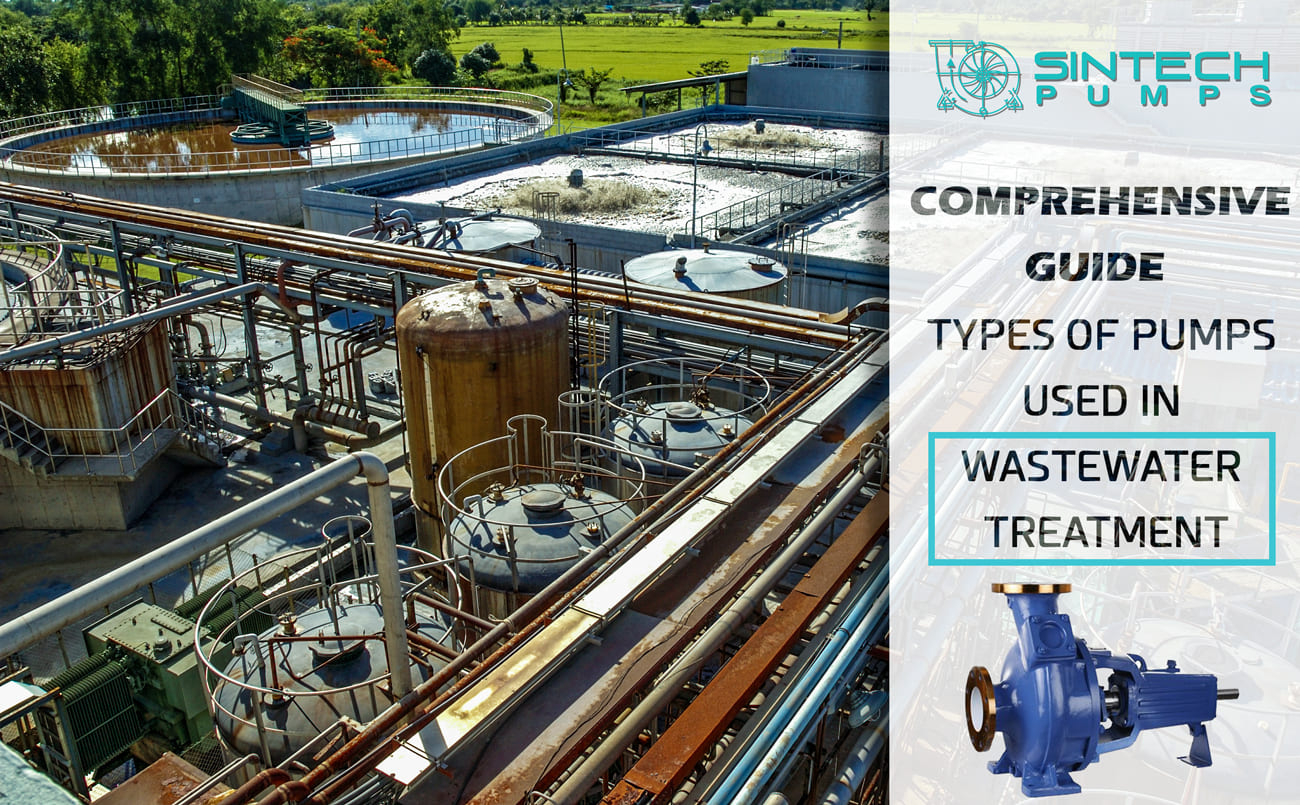
A Comprehensive Guide to the Types of  Wastewater Pumps used in Wastewater Treatment Today, with drastic global climate changes and widespread droughts, Waste Water Management has become more crucial than ever before. Wastewater treatment is the need of the hour in commercial, residential complexes as well as in industrial zones. Wastewater Treatment Plants – The Pressing Need of the Hour Wastewater treatment plants play a vital role in places like industries where large volumes of wastewater are discharged every day. Wastewater treatment not only gives you the satisfaction of doing your bit to the Earth’s most precious resource but also could reduce your overall operational costs significantly. In industries like chemical, food processing, manufacturing, pharmaceutical and several others, wastewater treatment plants are a must to meet government regulations and rules. When it comes to treatment plants, there are three different treatment processes used like – primary, secondary and tertiary. The quality of treated water depends on the type of treatment process used. Different industries employ different types of treatment processes, based on the quantity of wastewater, contaminants in it and the level of purity required and other miscellaneous factors. However, what remain common among all wastewater and sewage treatment plants is that they all depend on wastewater pump(s) for the process. Role of Pumps in Wastewater Treatment These pumps are used to move wastewater from the collection pit to the treatment plant and back into the industry. There are plenty of wastewater pumps depending on the application and usage requirements. Here in this article, you can find all that you need to know about these pumps in one place. Let’s get started. Commonly used Types of Wastewater Pumps In any wastewater treatment plant, pumps play a vital role. They help in collecting the wastewater from different parts of the plant and transfer it to the treatment plant. Once the water is purified, pumps then assist in moving the treated water to places where it is required or to a storage tank. Based on the technique used for water treatment as well as the force required, there are several types of wastewater pumps in usage. Let’s take a look at the types of pumps based on their operation.

Centrifugal Pumps

As the name implies, these pumps make use of a centrifugal force to create sufficient velocity to displace the fluid through the system. Centrifugal pumps come with rotating impellers. These are parts that resemble a mechanical fan. It has a small intake and a large outlet. Highlights of a centrifugal pump that makes it ideal for wastewater treatments:
  • Simple and straightforward design that makes it practical to operate
  • The moving parts are highly durable, ensuring that your pumps last for long
  • Require minimal maintenance

Positive Displacement Pumps

These pumps make use of rollers, gears, impellers to displace fluid through the system. They are highly durable and are able to pump both liquids as well as slurries with lots of solid particles. The most popular type of positive displacement pumps are the diaphragm pumps. As the name states, these pumps have a chamber and a diaphragm membrane and are fitted with discharge valves. Other Popular Types of Wastewater Pumps There are plenty of wastewater pumps depending on the specific requirements of a particular application. Here are a few common ones:

Submersible Water Pumps

As the name suggests, these pumps are entirely submerged in the liquid they are displacing. They are mostly used to drain sewage or slurry. The pump is placed under the wastewater or sewage levels, and its operation is controlled with the help of level sensors. While some submersible pumps can handle only liquids and are used to drain water from trash pumps and sumps, others can handle solid sewage as well.

High-Pressure Pumps

These pumps employ axial piston principle and have a compact and light design. They can either be variable delivery pumps or fixed displacement pumps.

Water Pressure Booster Pumps

As the name indicates, these pumps are used in wastewater treatment plants to control and boost water pressure.

Agitator Pumps

This type of pumps supplies kinetic energy along the pump intake.

Circulation pumps

These pumps are used when you need to keep the slurry moving through the treatment plant.

Progressive Cavity Pumps

Here, in these pumps, storage tanks or pipelines are used to transfer fluids and slurry from the suction area to the discharge area. Apart from these, there are several other types of pumps used in wastewater treatment like mixed flow pumps, lift stations, and trash pumps. Final Thoughts Ultimately, the type of sewage pump you choose for your water treatment plant depends on several factors. The pump you choose must be able to withstand the abrasion and corrosion caused by the slurry or wastewater. Also, the pumps used in industrial plants are vastly different from those used in residential complexes. The former pumps must be highly durable and heavy-duty to handle large volumes effectively. Here, at Sintech, we provide you with different types of wastewater pumps, which are customized to suit your specific requirements and applications. Our pump experts analyze the volumes of wastewater your generate, the contaminants in the water and the level of purity required, to help you select the ideal pump that minimizes overall operational and maintenance costs while lasting long term. Give us a call at +91-120-4176000 or drop in your queries here, to find the best wastewater pump for your specific project at the most affordable prices.
Sintech Pumps No Comments

Tips to Reduce corrosion in Sea Water Pumps

Don’t Let Corrosion Eat Away your Sea water Pumps Steps to Tackle Corrosion & Keep your Pumps functioning efficiently All desalination operations make use of water pumps. They use either submersible pumps for seawater intake or to sea water pumps the desalinated water to storage. Irrespective of the type and size of the pumps, you have to ensure that it lasts for a long time. Keeping Corrosion at Bay Makes the Pump Healthy One of the biggest hurdles faced by all sea water pumps is “Tackling Corrosion.” Corrosion wears down the critical components of a pump, thereby taking a toll on its lifespan. Apart from decreasing the durability of pumps, corrosion can also wreck havoc to the operational efficiency. Hence, it’s critical to avoid corrosion in your Sea water pumps. Corrosion Costs Corrosion if unchecked, leads to expensive costs that eat the profits. Here are the three types of expenses incurred by plant owners due to corrosion.
  • Direct Loss – This is a result of damage of materials by corrosion. For instance, consider a piping system that has been corroded and must be replaced.
  • Maintenance Costs – These are indirect costs that occur as a result of corrosion prevention. For instance, if you paint your pumping system every few years with non-corrosive paint, then it comes under maintenance costs.
  • Indirect Losses – These are other costs that occur a result of corrosion. For instance, you shut down production for a few days due to damaged pumping systems, and this leads to loss of revenue. The loss of income comes under indirect losses.
The first-step in controlling corrosion costs is to understand what is corrosion and the reasons behind it. Causes for Failure of Sea-Water Pumps Before, we take a look at the steps to prevent corrosion let’s take a closer look at the reasons why sea water pumps fail.
  • Corrosion – It’s the deterioration of the pump material that occurs when it’s exposed to the components of water. Sea water is high in mineral and salt content, which leach the pumps materials over time causing chemical reactions. These reactions eat away the pumps resulting in wear and tear.
  • Rust Formation – This occurs when oxygen corrodes iron or steel, leading to the formation of iron oxide, which is known as rust.
  • Erosion – This occurs when abrasive materials (like salts, minerals) impinge on the pump’s surface. Unlike corrosion, which can occur within a short span, erosion takes a longer time.
  • Abrasion – This occurs when a rotating foreign particle (like sands, small stones, minerals present in sea-water) rub on a stationary surface (the components of a pump).
Steps to Avoid Corrosion in Sea-Water Pumps #1: Choose the Right Pump The easiest and often best way to avoid corrosion is to prevent it from occurring in the first place. You can overcome the harmful effects of corrosion by choosing the right pump that suits your environment. When selecting a pump, you have to consider:
  • The environment
  • The materials handled by the pump
  • Pump efficiency and output
Corrosion is a natural phenomenon, especially while handling harsh fluids like sea water. However, you can avoid it a great deal and slow down its effect by choosing high-quality pumps that can sustain extreme operational environments. For instance, centrifugal pumps made from stainless steel are perfect for sea water pumps. Do your research. Check out the different options available in the market and find the right pumping system that withstands the harmful effects of corrosion. Pro Tip: Not sure which pump will work best for you? Overwhelmed by the technical jargon while selecting pump systems? Worry not, get in touch with our Pump Experts, who guide you to finding the right sea water pumps that not only meets your requirements but also operates efficiently for years to come. #2: Give Attention to the External Parts Too The outer surfaces of the water pump that are exposed to the elements of nature also have to be protected from corrosion. While these parts may or may not come in direct contact with the pumped material, in this case, seawater, they are still exposed to harsh conditions. For instance, submerged pumps not only pump sea-water but are also placed directly inside salt-water. Thus, there is a requirement to protect these external parts of the pump. Opt for materials that are rust-proof like stainless steel. Alternatively, you can coat the surfaces of these parts with corrosion resistant paints or other products. Lining the exterior with paints is an excellent way to keep off corrosion. The paint not only serves to repel water from the pump’s surface but also keeps off other contaminants as well. Long Live the Sea water Pumps Sea water pumps require a bit of extra care and maintenance when compared to freshwater systems. This is because sea water is highly corrosive and tends to wear away any system that it comes in contact with. However, you can ensure the life of your sea water pump by choosing the right pump materials and making use of paints and other coatings to prevent rust formation and corrosion. Need help choosing the right sea water pumps for your desalination plant? Get in touch with our Pump Experts by ringing up +91-120-4176000 or mail us on sales@sintechpumps.com. Sintech Pumps India is a leading pump supplier with clients across several countries. With Sintech, you’re assured of high-quality and the latest pump technology that improves the overall efficiency of your operations.