

Unlock the key to your pump’s long life by understanding pump vibrations. Excessive vibration is an excellent indicator that something is wrong with your pump. It can be an installation issue, mechanical issue, or any other issue. Vibrations issues in your pump can be easily resolved with the right maintenance steps.
Why excessive vibrations denote that something is wrong with your pump?
 When your pump operates at a frequency different from the natural frequency of the system, it causes:
- Delay in pump operations
- Reduced efficiencies and
- Shorter life span
What are machine natural frequencies?
 Natural frequencies are the frequencies at which a machine vibrates when it is in regular operation. When a pump operates at its natural frequency, the energy input to the system amplifies, creating an ideal resonant condition. When a pump moves away from this natural frequency, even by a small amplification, it creates a severe noise and excessive vibration in your pump.Mass and stiffness of the system affect the natural frequency, but it is difficult to change after the installation as it’s costly. Here the word system includes the actual water pump, driver, foundation, base along with the attached piping.All pumps like centrifugal pumps, domestic water pumps, heavy industrial pumps, and vertical multistage centrifugal pumps are prone to resonance, but special attention must be given to variable speed pumps.Variable pumps have greater exiting natural frequencies. Fixed frequencies and overlapping bands of frequencies must be given attention while choosing pumps. This also allows users to evaluate multiple design types, speed ranges, and dampening options.
How to stop vibration issues in pumps?
Before you work on stopping pump vibrations, you have to identify the underlying reason for the vibration. Here, in this guide from Sintech, leading water pump manufacturers in India, we take a look at the common reasons for pump vibrations and list the ways to overcome it.1. Pump Cavitation
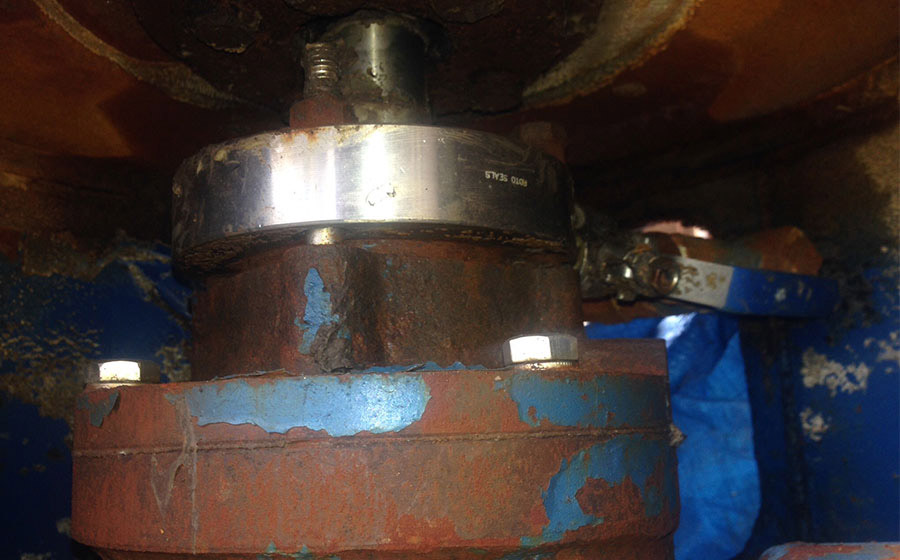 Cavitation occurs when the pump produces an insufficient positive suction head. When the pressure of the liquid at the impeller inlet is equal to the pressure of the liquid vapor, it causes air pockets to form and collapse.Pump cavitation can be easily spotted by the sound of these air pockets popping. It sounds similar to rocks rumbling inside the pump, or you can even hear distinct air popping sounds. Apart from this noise, pump cavitation can also be identified by a higher energy requirement for pump operation than usual.Simple tips to prevent cavitation:
- Check if the pump filters and strainers are clean
- Use a flow meter or pressure gauge to see if the pump is operating at its ideal curve
- Re-evaluate the pump design if the pump curve is not ideal
2. Bent Pump Shaft
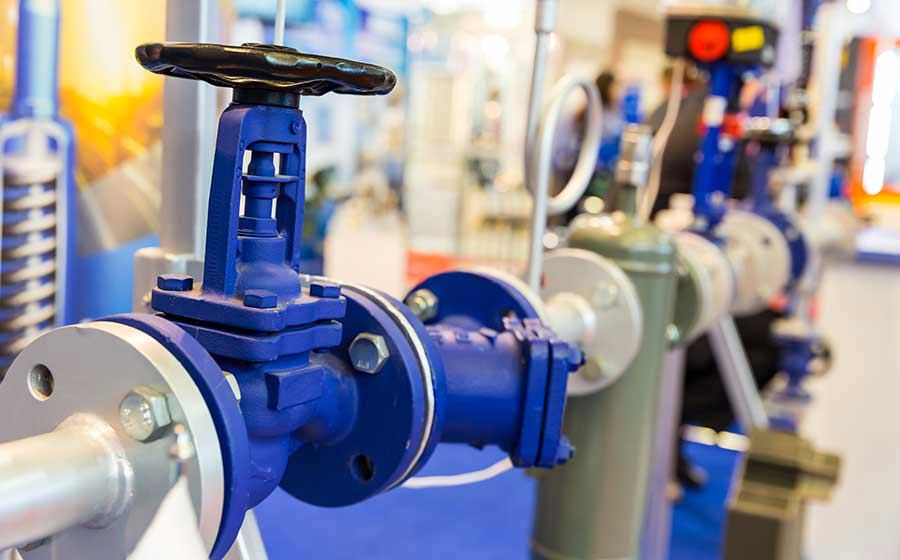 If the pump’s shaft is bent, it causes high axial vibrations. Generally, bent pump shafts occur near the coupling joints.How to identify a bent pump shaft? Use dial indicators.
3. Pump Flow Pulsation
 When a pump operates near the shut-off head, it’s known as pulsation. Pump flow pulsation is caused by the following factors:
- Leaking valves
- Improper spring rates
- Lack of proper feed
- Using multiple pumps on a common header
- Worn packing valves
- Piping designs that restrict the flow
4. Pump Impeller Imbalance
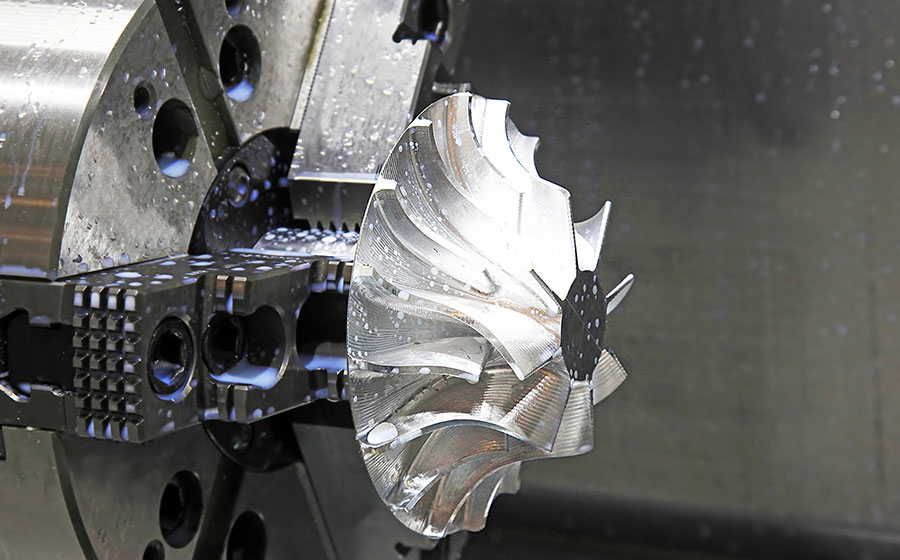 When there is an imbalance in the pump assembly, it causes vibrations and heat generation. Balancing the pump impellers extends the life of the bearings, which in turn reduces excessive vibrations.Some of the dangers of pump impeller imbalance are:
- Bearing failure
- Pump seals failure
- Excessive vibration
- Shaft deflection, which leads to bent shafts
- Pump seizures
5. Bearing Failures
 One of the main reasons for pump vibrations is bearing failure. While your pump may work for 20,000 hours without any issues, the pump bearings give out long before that. The reasons for pump bearing failure are many: corrosion, inadequate lubrication, contamination, excessive wear and tear, weather conditions, overheating, and more.Apart from these issues, another main cause of pump bearing failure is due to the wrong selection of bearings.How to avoid it? You can overcome pump bearing issues by lubricating bearings regularly with pump manufacturer recommended oils. Also, replace bearings regularly to avoid excessive vibrations.
6. Shaft Misalignment
 Just like impeller imbalance, shaft misalignment can cause excessive vibrations. Shaft misalignments cannot be detected externally and require professional intervention.If vibrations continue, even after rectifying the above conditions, it may be because of shaft misalignment.Here are a few signs that indicate there is shaft misalignment in your pump:
- Excessive oil leaks along with the bearing seals
- Coupling failures
- Loose foundation bolts or coupling
- High oil discharges
- Heat generation near the bearings and casings
- Excessive radial or axial vibration